Memory Techniques How to Use Dual Coding to Improve Memory
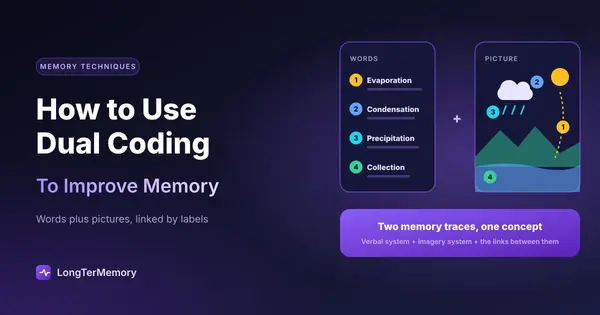
Dual coding pairs words with visuals to create two memory traces. Learn what research says, how to draw useful diagrams, and how to build richer flashcards.
The best study apps for students in 2026, compared by job: flashcards (Anki, Quizlet, Brainscape), notes (Notion, Obsidian, RemNote) and focus blockers.
A realistic 300-hour CFA Level 1 study plan: topic weights, why Ethics, FRA and Quant matter most, and when to switch from end-of-chapter questions to mocks.
A TOEFL iBT study plan for the 2026 format: sections, task types and the new 1-6 score scale, strategies for each skill, and how to use practice tests well.
Pass the CKAD: the 2-hour hands-on format, the Kubernetes concepts tested most, kubectl speed tricks, and how to use killer.sh and a home lab to practice.
Build stamina for a long professional exam: full-length endurance training, a break plan for multi-hour tests, and nutrition, hydration and pacing that hold.
No results found
Try different keywords
3 articles tagged with visual learning
Memory Techniques Dual coding pairs words with visuals to create two memory traces. Learn what research says, how to draw useful diagrams, and how to build richer flashcards.
Study Techniques Discover how flowcharts transform complex processes into memorable visual maps. Learn to build, recall, and combine them with active recall for retention.
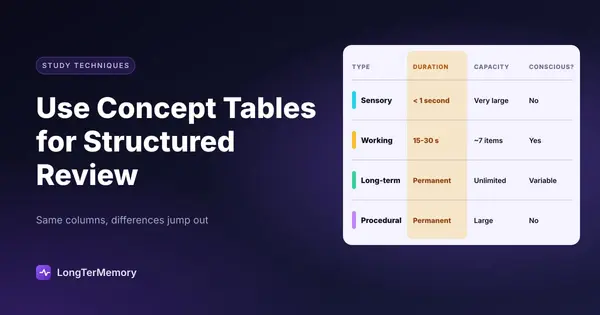
Study Techniques Learn how concept tables help you compare, organize, and retrieve study material faster, with practical examples for any subject.