
You have one day. Maybe less. And you need to cover three subjects, four if you’re in a particularly stressful situation. History, biology, calculus, and a language. Or tax law, ethics, financial reporting, and auditing. Or three units of a single subject that you’ve been putting off for two weeks.
Whatever the combination, the instinct is usually the same: block out the whole day, pick the most terrifying subject first, work through it until you’re done, then move to the next. Linear, logical, orderly.
The problem is that this approach , spending three hours buried in one subject before moving on , is one of the least efficient ways to memorize multiple things. The research on this is clear, and the better approach is almost exactly the opposite of what instinct suggests.
The Interference Problem (And Why Your Current Approach Makes It Worse)
When you study a large block of material from a single subject for several hours, a phenomenon called proactive interference kicks in. Earlier learning begins to interfere with later learning within the same subject. And when you finish that subject and start the next, retroactive interference works in reverse , new learning degrades what you just memorized.
The brain processes all subjects as competing information when they share features (timelines, formulas, terminology, narrative structure). Studied back-to-back in long blocks, they blur. The battle of Waterloo starts merging with the battle of Hastings. The quadratic formula starts contaminating the binomial theorem.
Here’s the counterintuitive solution: switching between subjects more often, not less, actually reduces this interference and improves retention across all subjects. This is the principle behind interleaving, and it’s one of the most robust findings in learning science.
The Core Strategy: Interleaving Instead of Blocking
Blocking is studying Subject A for two hours, then Subject B for two hours, then Subject C for two hours. It feels organized. It’s not efficient.
Interleaving is alternating between subjects in shorter bursts throughout the day: 45 minutes of Subject A, 45 minutes of Subject B, 45 minutes of Subject C, then cycling back to Subject A. It feels chaotic. It’s actually far more effective.
A landmark 2010 study by Rohrer and Taylor showed that students who studied using interleaved practice outperformed blocked-study students by 43% on final tests , even though the interleaved group reported feeling less confident while studying. The struggle of switching contexts is the learning.
Why does interleaving work? Two reasons:
Contextual discrimination. When you switch subjects frequently, your brain is forced to identify which subject this is each time , which means it’s actively encoding subject-specific cues alongside the content. This makes retrieval more precise and less prone to cross-subject confusion.
Distributed encoding. Instead of loading all your Subject A content into a single long session, you’re encoding it across multiple shorter sessions with rest and other material in between. The gaps between study bouts are not wasted time , they’re consolidation time.
Building Your Interleaved Day: Time-Blocking Multiple Subjects
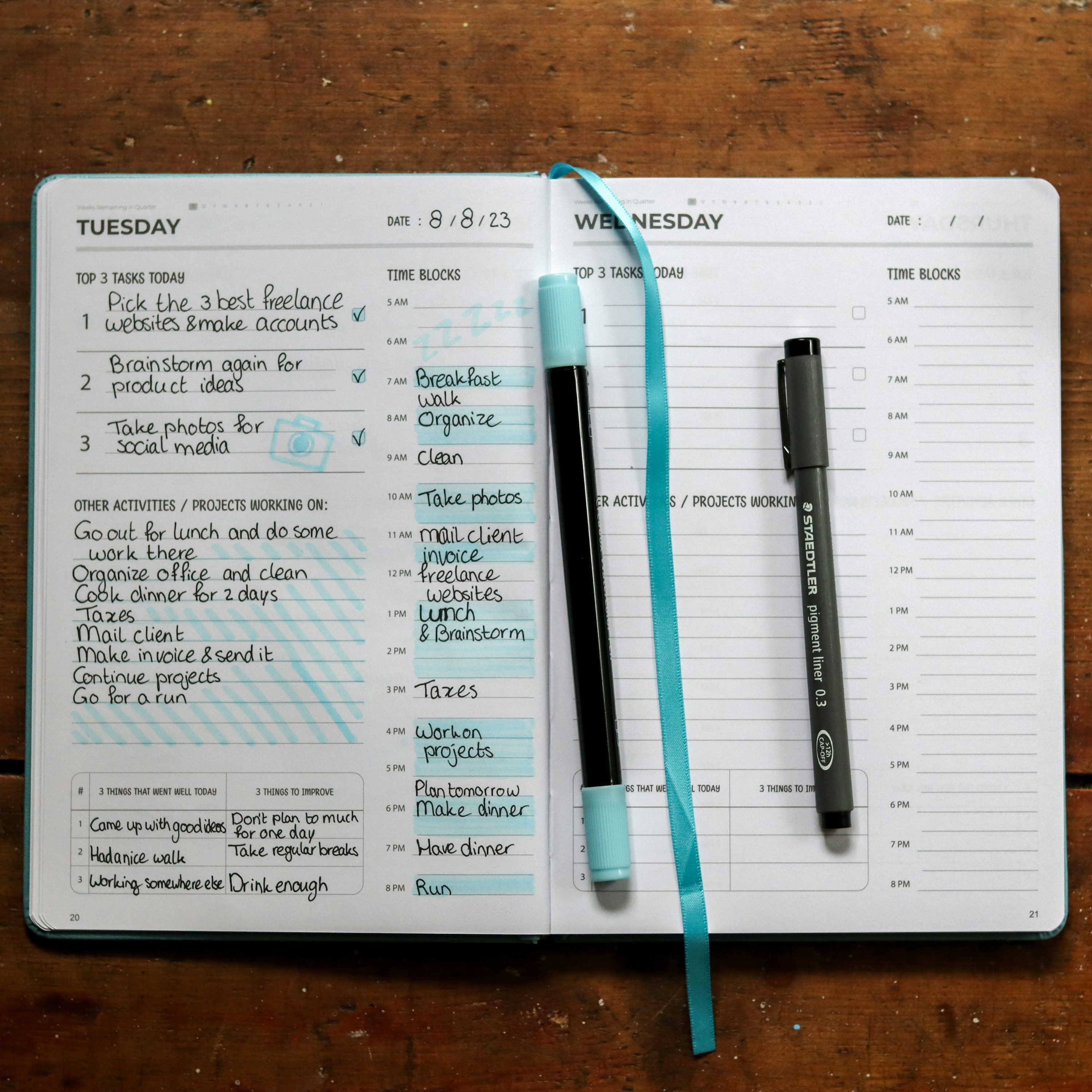
Here’s how to structure a full one-day multi-subject study session using interleaving.
Morning (highest cognitive capacity): Use your first 3–4 hours for the two hardest or highest-stakes subjects. Alternate between them in 40–50 minute blocks with 10-minute breaks.
Midday (moderate capacity): Use the post-lunch window for your third subject and review of morning material. Your brain’s ability to encode new content dips slightly after midday, but review (retrieval practice of already-studied material) remains effective.
Afternoon (consolidation): Cycle back through all subjects in shorter 20–30 minute review sessions using active recall , testing yourself, not re-reading. This is where the morning’s learning starts to solidify.
Evening (light review): 30–45 minutes of final review for your highest-priority material. Then stop. Sleep is not optional , it’s when memory consolidation actually happens, and it applies to everything you studied during the day.
A sample schedule for 4 subjects:
| Time | Block |
|---|---|
| 8:00–8:50 | Subject A (new content) |
| 9:00–9:50 | Subject B (new content) |
| 10:00–10:50 | Subject A (new content, continued) |
| 11:00–11:50 | Subject C (new content) |
| 12:00–13:00 | Break + lunch |
| 13:00–13:40 | Subject B (review of morning) |
| 13:50–14:30 | Subject D (new content) |
| 14:40–15:20 | Subject C (review + new content) |
| 15:30–16:10 | Subject A (review) |
| 16:20–17:00 | Subject D (continued) |
| 19:00–19:45 | Final sweep: all 4 subjects, active recall only |
The 10-minute breaks between blocks are non-negotiable. Your brain needs the gap to begin consolidation, and returning to the desk slightly fresh produces better encoding than grinding through fatigue.
What to Prioritize When You Have Limited Hours and Many Topics
Not all topics are equal. And when you’re memorizing multiple subjects in a single day, the worst thing you can do is give equal time to everything. That guarantees shallow coverage across the board.
Before you start studying, spend 15 minutes on a triage analysis:
Step 1: Identify your exam weights. Which topics carry the most marks? Which are likely to appear? In most exams, 20% of the content accounts for 60–70% of the marks. Find that 20%.
Step 2: Rate your current knowledge. For each subject, honestly rate yourself: confident, shaky, or blank. Your study time should be weighted heavily toward shaky material. Confident material needs a light review only. Blank material , if there’s too much of it , may need to be strategically deprioritized if it’s low-weight.
Step 3: Set a minimum target per subject. Decide in advance: what would a successful review of Subject C look like today? Not “finish everything” , a specific, achievable target. “Know the five key causes of X and be able to explain two of them in detail.” This prevents the sinkhole effect where one subject consumes the whole day.
Step 4: Protect your highest-priority subject. Put Subject A , your hardest or highest-stakes one , in the first block of the day, when cognitive capacity is highest. Don’t save the hard stuff for when you’re tired.
Common Mistakes When Studying Multiple Subjects in One Day
Studying in too-long blocks. If you’re in a single subject for more than 90 minutes without switching, you’ve lost the interleaving benefit and you’re likely experiencing diminishing returns. Cut the block shorter.
Not reviewing earlier material in later sessions. It’s tempting to just move forward , new content, new content. But the morning’s Subject A encoding will decay unless you revisit it in the afternoon. Schedule review passes explicitly.
Skipping breaks. Breaks feel like wasted time when you have a lot to cover. They’re not. A 10-minute break between blocks improves encoding of the material in the next block. A lunch break with no studying improves retention of the morning’s work. This is established neuroscience, not motivational advice.
Confusing reading with memorizing. Reading through notes or a textbook while covering multiple subjects gives you the feeling of covering a lot of ground. But reading is not memorizing. At some point in every session, you need to close your notes and test yourself , active recall is the only activity that actually builds retrievable memory. Build retrieval practice explicitly into every subject block.
Scaling Up With Tools
When you’re covering multiple subjects with a large volume of material, the manual work of creating Q&A pairs, tracking what you know, and scheduling reviews across all subjects can itself become overwhelming.
LongTerMemory handles this automatically. Upload your materials for each subject , lecture notes, PDFs, textbook excerpts , and the AI generates Q&A flashcards and manages your spaced repetition schedule across all subjects simultaneously. It knows which cards across all your subjects are due for review, which ones you’re struggling with, and which ones you can safely skip today.
This is particularly powerful for multi-subject days: instead of manually deciding what to review in each subject, you can open the app and it surfaces exactly the cards that need attention today, across all subjects, prioritized by your forgetting curve. That 45-minute afternoon review session becomes much more focused and much more effective.
The Day-After Strategy
One-day multi-subject memorization is a sprint. But memory doesn’t consolidate fully in 24 hours. The most important thing you can do the day after a heavy multi-subject session is a brief review , 20–30 minutes of active recall across the highest-priority material from all four subjects.
This review locks in what the overnight consolidation started. Without it, retention drops sharply within 48–72 hours, and the whole day’s work is at risk of fading before the exam.
Schedule it. Block it. It’s the highest-return 30 minutes you’ll spend in your exam preparation.
Summary: The Multi-Subject Day Done Right
- Use interleaving, not blocking , switch subjects every 40–50 minutes
- Put your hardest subject in the first block of the morning
- Triage your material before you start , protect time for high-weight topics
- Build review passes into the afternoon, not just new content
- Use active recall in every session, not passive reading
- Take your breaks , they’re consolidation time, not wasted time
- Schedule a brief review the next day to lock in overnight consolidation
One day is not ideal for memorizing multiple subjects. But with the right strategy, it’s far more productive than most students ever realize.