How Stress Impairs Memory and How to Reverse It
Chronic and acute stress damage memory formation. Learn the science behind cortisol's effects and evidence-based techniques to restore learning capacity.
Table of Contents
- How Cortisol Interferes With Hippocampal Memory Formation
- Chronic Study Stress vs. Acute Exam Stress: Different Effects
- Evidence-Based Stress Reduction Techniques That Restore Memory Performance
- Nutrition and Supplements That Support Stress Resilience
- Reframing Exam Stress as a Challenge Rather Than a Threat
- Building a Stress-Resilient Study Environment
- When to Seek Additional Help
- How LongTerMemory Reduces Study-Related Stress
- The Bottom Line
Stress is the silent killer of academic performance. Not because it distracts you, though it does that too, but because it physically alters the brain structures responsible for forming and retrieving memories. You can have the best study plan, the most effective techniques, and perfect materials, but if your stress levels are chronically elevated, your brain simply cannot encode information efficiently.
The good news is that this damage is reversible. Understanding how stress affects memory gives you the ability to intervene, protect your cognitive function, and in some cases, even use mild stress to your advantage. The relationship between stress and memory is not a simple “stress is bad” equation. It’s a nuanced biological system that you can learn to manage.
How Cortisol Interferes With Hippocampal Memory Formation
The core mechanism connecting stress to memory impairment is a hormone called cortisol. When you experience stress, your adrenal glands release cortisol as part of the fight-or-flight response. In acute, short-term situations, this is adaptive. Cortisol mobilizes energy, sharpens attention, and prepares your body to respond to threats.
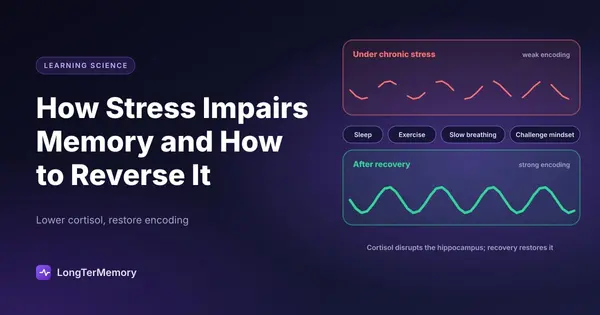
The problem arises when cortisol levels remain elevated for extended periods. Chronic cortisol exposure is neurotoxic to the hippocampus, the brain region most responsible for converting new experiences into long-term memories. The hippocampus is densely packed with cortisol receptors, which makes it especially sensitive to stress hormones.
Here’s what the research shows. In a landmark study by Lupien and colleagues at McGill University, chronically stressed adults showed measurable hippocampal volume reduction compared to low-stress controls. Smaller hippocampal volume correlates with poorer memory performance. The effect is dose-dependent: the higher the cortisol levels over time, the greater the memory impairment.
Cortisol disrupts memory formation through several pathways:
| Mechanism | Effect on Memory |
|---|---|
| Reduced glucose uptake in hippocampus | Less energy available for encoding new information |
| Impaired long-term potentiation (LTP) | Weakened synaptic connections between neurons |
| Reduced neurogenesis in hippocampus | Fewer new neurons available for memory storage |
| Disrupted prefrontal cortex function | Poorer working memory and executive control |
| Enhanced amygdala activity | Emotional tagging that can distort or fragment memory encoding |
The prefrontal cortex disruption is particularly relevant for students. Working memory, the mental workspace where you hold and manipulate information during problem-solving, is highly sensitive to cortisol. When you’re stressed during an exam, your working memory capacity shrinks. You know the material, but you can’t hold enough pieces in mind simultaneously to solve the problem.
Chronic Study Stress vs. Acute Exam Stress: Different Effects
Not all stress is the same, and understanding the distinction between chronic and acute stress is essential for managing your cognitive performance.
Chronic study stress is the low-level, persistent anxiety that many students carry for weeks or months during a semester. It’s the background hum of worry about grades, workload, deadlines, and future outcomes. Chronic stress keeps cortisol elevated above baseline for long periods, producing the hippocampal damage described above. It also disrupts sleep, which compounds the memory impairment because sleep is when memory consolidation occurs.
Acute exam stress is the intense spike of anxiety you feel right before or during a test. Surprisingly, acute stress has a more complex relationship with memory. Moderate acute stress can actually enhance memory formation for emotional or salient information. This is why you might vividly remember details from a stressful exam years later. However, high acute stress impairs retrieval, the ability to access information you already know. You encoded the material fine, but you can’t get it out under pressure.
The practical implication is that chronic stress must be reduced, while acute stress must be managed to keep it in the moderate range where it doesn’t shut down retrieval.
| Stress Type | Duration | Cortisol Pattern | Memory Effect | Primary Strategy |
|---|---|---|---|---|
| Chronic | Weeks to months | Sustained elevation | Impaired encoding and consolidation | Lifestyle and environmental changes |
| Acute pre-exam | Hours to days | Sharp spike | Impaired retrieval if severe | Calming techniques and preparation |
| Acute during exam | Minutes | Very high spike | Severe retrieval impairment | In-the-moment stress regulation |
Evidence-Based Stress Reduction Techniques That Restore Memory Performance
The following techniques have solid research support for reducing cortisol, improving memory function, or both. They are not equally effective for everyone, so experiment to find the combination that works for your physiology and schedule.
Physical exercise. Aerobic exercise is one of the most potent stress reducers available, and it has direct benefits for hippocampal function. Studies consistently show that regular aerobic exercise increases hippocampal volume and improves memory performance. The mechanism is partly cortisol reduction and partly increased production of brain-derived neurotrophic factor (BDNF), a protein that supports neuron growth and synaptic plasticity.
You don’t need to become an athlete. Thirty minutes of brisk walking, cycling, or swimming three to four times per week produces measurable benefits. The key is consistency. A single intense workout before an exam won’t undo months of chronic stress, but a regular exercise habit will gradually restore your cognitive capacity.
Sleep optimization. Sleep and stress form a vicious cycle. Stress disrupts sleep, and sleep deprivation elevates cortisol. Breaking this cycle is essential for memory recovery. Prioritize 7-9 hours of sleep per night, especially in the nights following heavy study sessions when memory consolidation is most active.
If anxiety keeps you awake, try the following: stop studying at least one hour before bed, dim the lights, avoid screens, and use a simple relaxation technique like progressive muscle relaxation or body scanning. The material will still be there in the morning. Your brain needs the sleep more than it needs another hour of review.
Mindfulness and meditation. Mindfulness-based stress reduction (MBSR) programs have been shown to reduce cortisol levels and improve working memory capacity. A 2010 study by Jha and colleagues found that military personnel who underwent mindfulness training maintained working memory capacity during high-stress pre-deployment periods, while controls showed significant decline.
You don’t need a formal program. Even ten minutes per day of focused breathing meditation produces benefits within a few weeks. The key skill is learning to observe anxious thoughts without engaging with them. When a worry about an upcoming exam arises, you note it and return your attention to your breath rather than following the worry into rumination.
Social connection. Social isolation increases cortisol. Social connection, even brief and casual, reduces it. Study groups, regular meals with friends, or even short conversations with classmates between classes buffer against stress. The effect is not just psychological; physical touch and positive social interaction trigger oxytocin release, which counteracts cortisol.
Time in nature. Even brief exposure to natural environments reduces cortisol and improves cognitive function. A 20-minute walk in a park produces measurable cortisol reduction. If you can’t access nature, looking at images of natural scenes or keeping plants in your study space has smaller but still positive effects.
Structured breaks and recovery. The human brain cannot sustain peak cognitive effort indefinitely. Working without breaks elevates stress hormones and degrades performance. Use the Pomodoro Technique (25 minutes of focused work followed by a 5-minute break) or a similar structure to ensure regular recovery periods. During breaks, actually rest. Don’t check stressful emails or scroll through social media. Stand up, stretch, look out a window, or chat with someone.
Nutrition and Supplements That Support Stress Resilience
What you eat affects your stress response. While diet cannot replace the behavioral techniques above, it can support your brain’s resilience to stress.
Omega-3 fatty acids found in fatty fish, walnuts, and flaxseed support neuronal membrane health and have been associated with reduced cortisol reactivity to stress. Students with higher omega-3 intake show better emotional regulation under academic pressure.
Magnesium plays a role in regulating the body’s stress response. Many people are mildly magnesium deficient, and supplementation has been shown to reduce subjective anxiety in some populations. Food sources include leafy greens, nuts, seeds, and whole grains.
Limit caffeine. Caffeine increases cortisol and amplifies the stress response. A moderate amount in the morning is fine for most people, but excessive caffeine, especially in the afternoon and evening, worsens both stress and sleep quality. If you’re chronically stressed, consider reducing your intake and avoiding caffeine after 2 PM.
Blood sugar stability. Blood sugar crashes trigger cortisol release. Eating regular meals with adequate protein, fiber, and complex carbohydrates helps maintain stable blood sugar and avoid stress-inducing crashes. The classic stressed-student diet of coffee, energy drinks, and skipped meals is a recipe for cortisol dysregulation.
Reframing Exam Stress as a Challenge Rather Than a Threat
The way you mentally frame a stressful situation affects your physiological response. When you view an exam as a threat to your self-worth, your cortisol response is larger and more prolonged. When you view it as a challenge to be met, your physiological response is more adaptive.
This isn’t positive thinking fluff. It’s supported by cognitive appraisal theory and confirmed by experimental studies. Students who receive brief interventions teaching them to view stress as enhancing rather than debilitating show improved exam performance and lower cortisol responses.
A simple reframing technique: before an exam, remind yourself that the stress symptoms you feel (elevated heart rate, faster breathing) are your body preparing you to perform, not signs that you’re failing. Your brain is mobilizing resources. Thank it, and redirect your attention to the task.
Building a Stress-Resilient Study Environment
Your physical study environment affects your stress levels more than you might think. Small changes can reduce the background stress that accumulates over a study session.
Noise level. Unpredictable noise (conversations, traffic, construction) elevates cortisol. If you can’t control the noise, use noise-canceling headphones or consistent background sound like brown noise or instrumental music. Avoid music with lyrics during demanding cognitive tasks.
Clutter. Visual clutter increases cognitive load and subtle stress. A clean, organized desk doesn’t just look better, it reduces the mental effort required to focus. Spend two minutes tidying before each study session.
Lighting. Dim or harsh lighting increases eye strain and fatigue, which amplifies stress. Natural light is ideal. If that’s not available, use full-spectrum bulbs and position your light source to avoid glare.
Temperature. Being slightly too warm or too cold is a constant low-level stressor. Research suggests that cooler temperatures (around 68-70°F or 20-21°C) support sustained cognitive performance better than warmer environments.
When to Seek Additional Help
Sometimes stress exceeds what self-management techniques can address. If you experience any of the following, consider speaking with a counselor or mental health professional:
- Persistent insomnia lasting more than two weeks
- Panic attacks during exams or study sessions
- Inability to concentrate even on non-academic tasks
- Physical symptoms like chronic headaches, digestive issues, or chest tightness
- Thoughts of self-harm or hopelessness
There is no shame in seeking help. Chronic stress is a medical issue with biological consequences. Treating it is as rational and necessary as treating a physical injury.
How LongTerMemory Reduces Study-Related Stress
One underappreciated source of student stress is the sheer administrative burden of managing study materials. Creating flashcards, organizing notes, scheduling reviews, and tracking progress all consume cognitive resources that could be spent on actual learning.
LongTerMemory reduces this burden by automating the most time-intensive parts of the study workflow. AI-generated flashcards eliminate hours of manual card creation. Automated spaced repetition scheduling removes the need to decide what to review and when. The result is fewer decisions, less cognitive load, and more mental bandwidth available for the material itself.
When your study system runs smoothly in the background, you experience less of the low-level chronic stress that comes from feeling disorganized or behind. You can focus on learning rather than managing your learning infrastructure.
The Bottom Line
Stress is not just a feeling. It is a biological state that directly impairs the brain structures you need for learning and memory. Chronic stress shrinks your hippocampus. Acute stress disrupts your working memory. Neither is conducive to academic success.
But this impairment is reversible. Regular exercise, adequate sleep, mindfulness practice, social connection, time in nature, structured breaks, and proper nutrition all reduce cortisol and restore cognitive function. Reframing exams as challenges rather than threats changes your physiological response. Optimizing your study environment reduces background stress.
You cannot eliminate stress from student life entirely, nor should you try to. Mild, short-term stress is a normal part of facing challenges. What you can and should do is prevent stress from becoming chronic, manage acute stress before it impairs retrieval, and build habits that support your brain’s capacity to learn.
Your memory is a biological system. Treat it with the care it deserves, and it will serve you well when exam day arrives.