
Picture this: you spend a whole Sunday afternoon grinding through a chapter of biology, or a set of Spanish vocabulary, or the principles of contract law. You test yourself at the end, and you actually know it , it’s there, it’s accessible, it feels solid. You go to bed satisfied. Then, three weeks later, the exam arrives. You sit down and realize, with a cold sinking feeling, that most of it is just… gone. Not hazy. Gone. You’re essentially relearning the material from scratch under time pressure, with all the panic that brings.
This isn’t a personal failing. It’s your brain doing exactly what it was designed to do , discarding information it hasn’t been asked to use again. The problem isn’t that you studied badly. The problem is that you studied in a way that the brain treats as a single, low-priority event rather than something worth keeping long-term. And there’s a fix for that. It’s been known about for over 140 years, it’s backed by some of the most robust research in all of cognitive psychology, and the vast majority of students still aren’t using it properly.
It’s called spaced repetition, and once you understand how it works , not just the technique, but the actual biology behind it , you’ll never approach learning quite the same way again.
The Man Who Memorized Nonsense So You Don’t Have To
In the 1880s, a German psychologist named Hermann Ebbinghaus did something genuinely unusual in the history of science: he used himself as the only experimental subject, spent years memorizing thousands of meaningless syllable strings , things like “DAX,” “BUP,” “ZOL” , and then systematically tested how quickly he forgot them.
The result was the forgetting curve, and it remains one of the most important and most ignored findings in all of education research.
What Ebbinghaus found was that memory loss after learning isn’t random or gradual , it’s steep, predictable, and front-loaded. Most of what you learn evaporates remarkably fast:
- Within 24 hours of a single study session, roughly half to two-thirds of the material is gone
- By the end of a week, 80 to 90 percent has faded
- After a month without review, you’re looking at 95 percent or more lost
That’s not an exaggeration for effect. Those are the actual numbers from a century of replication across different types of learners and different types of content. The curve is real, it’s steep, and it applies to you.
The corollary finding, though, is the crucial one , the part that makes this whole field practically useful rather than just depressing. Each time you review material before it fully fades, the forgetting curve flattens. The memory doesn’t just reset to day one , it actually becomes more durable. The slope of forgetting gets shallower with each successful retrieval. Eventually, material that once disappeared in 24 hours will still be there six months later, then a year later, then indefinitely.
That’s the core mechanism. Review at the right moments, and you’re not just refreshing the memory , you’re fundamentally changing its structure.
What’s Actually Happening Inside Your Head
The forgetting curve is a behavioral observation. The neuroscience that explains it took another century to catch up, and it’s worth understanding because it changes how you think about what you’re doing when you study.
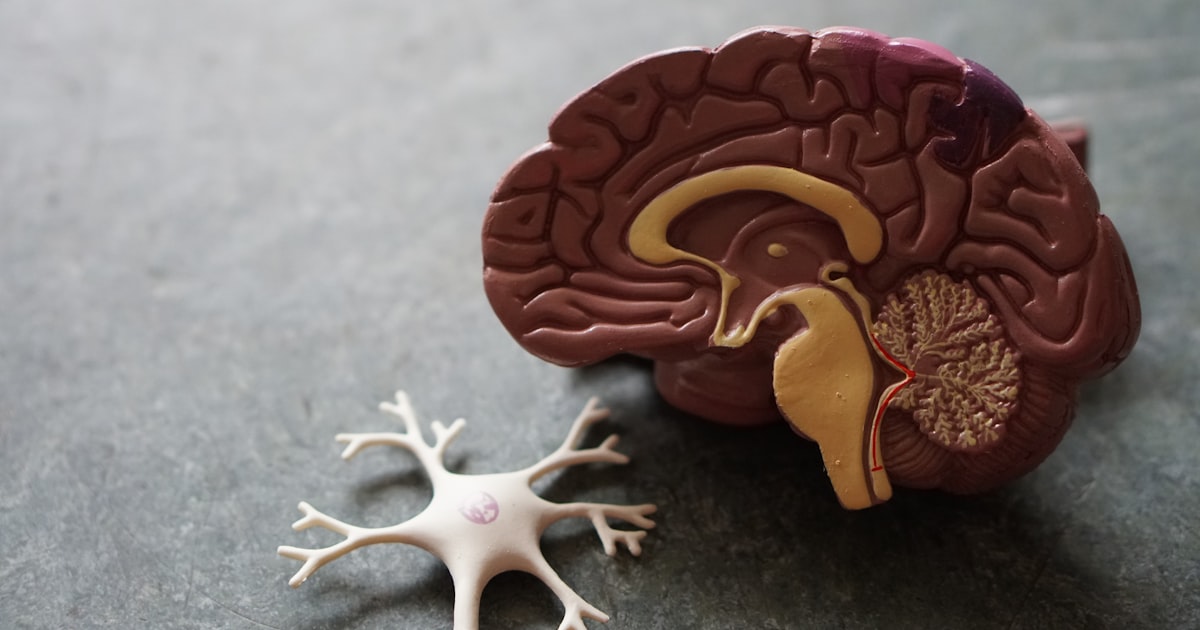
When you encounter new information, your brain encodes it initially in the hippocampus , a seahorse-shaped structure deep in the temporal lobe that acts as a kind of sorting and tagging center for new experiences. This initial encoding is fast but fragile. The connections formed are weak, easily disrupted by other incoming information, and subject to rapid decay if the brain doesn’t receive signals that the information matters.
Here’s the key: the brain decides what to consolidate into long-term memory largely based on how often and how recently that information has been accessed. It’s a ruthless efficiency system , if you’ve learned something once and never returned to it, the brain quite reasonably concludes that it wasn’t important and lets it fade. But if you keep coming back to it, if you keep making the brain pull it up, it gets the message. The hippocampus begins transferring those memories to the neocortex, where they get woven into a more stable, distributed network of long-term knowledge.
Each retrieval event doesn’t just access the memory , it literally rebuilds it. A process called reconsolidation means that every time you recall something, the memory is briefly destabilized and then restabilized in a slightly stronger form. It’s a bit like exercising a muscle: the act of pulling information up is the workout, and the rebuilding phase is where the gains actually happen.
There’s also a principle that cognitive scientists call desirable difficulty. The slight struggle of trying to remember something , sitting with the question for a moment before the answer comes, or feeling like it’s on the tip of your tongue , is not a sign that you’re failing. It’s exactly where learning is happening. The effort of retrieval is what drives reconsolidation. Easy recognition of material you’ve just read produces almost no durable memory trace. Effortful recall of material you reviewed several days ago produces a strong one.
This is why simply re-reading your notes is such a poor study technique. The information is right there , there’s no retrieval effort, no consolidation signal, no strengthening happening. You’re creating familiarity, not memory. And familiarity, as anyone who has blanked on an exam they studied hard for can tell you, is not the same thing as knowing.
The Schedule That Changes Everything
Given all of this, what does an optimal review schedule actually look like? The research converges on a fairly consistent answer, which has been refined by decades of study into what’s become known as the optimal spacing schedule:
| Review | Interval After Previous |
|---|---|
| 1st review | 1 day after initial learning |
| 2nd review | 3 days after 1st review |
| 3rd review | 1 week after 2nd review |
| 4th review | 2 weeks after 3rd review |
| 5th review | 1 month after 4th review |
| 6th review and beyond | 2+ months, growing each time |
Notice what’s happening here. The gaps between reviews start short and grow longer with each successful recall. That’s not arbitrary , it’s a direct response to the forgetting curve. Early on, when the memory is fragile, you review frequently to keep it from dropping below the threshold where you’d have to relearn. As the memory becomes more robust through repeated retrieval, you can afford to let more time pass before the next review. The growing interval is both a test of the memory’s durability and, when you pass it, further evidence to the brain that this is information worth holding onto long-term.
What happens if you apply this consistently? The same research tradition that produced the forgetting curve has produced equally striking findings about what happens when you work against it properly:
- Learners using spaced repetition consistently achieve 90%+ retention rates on material that would otherwise have been mostly forgotten within weeks
- Medical students in a 2006 study who used spaced repetition systems scored 50% higher on their final exams than those who studied conventionally , and when tested two years later, the spaced repetition group still retained a large proportion of the material while the control group had forgotten most of it
- Perhaps most counterintuitively: the spaced repetition students in that study achieved these results with 33% less total study time
That last point is worth pausing on. Not slightly less study time. A third less. The technique isn’t just more effective , it’s more efficient. Because instead of re-reading the same material repeatedly (most of which you already know) and cramming (which is almost entirely wasted effort past the test), you’re spending study time precisely where it’s needed , on the items that are about to slip past the forgetting threshold.
Why Cramming Is a Trap That Keeps Working
Given how clearly the evidence favors spaced repetition, it’s worth asking why cramming remains the dominant study strategy for most students. The answer is that cramming works , just not in the way people think it works.
If your goal is to pass a test tomorrow, cramming is genuinely effective. You can load a large amount of material into short-term memory in a single intense session, and most of it will be accessible the next morning. The problem is that “accessible tomorrow morning” and “retained for any length of time” are almost entirely different things. A week after a cram session, memory performance collapses back toward baseline. A month later, the material is effectively gone.
So cramming produces a real short-term gain and an almost total long-term loss. For a one-off exam in a subject you’ll never use again, that trade-off might be acceptable. But for anything where the knowledge needs to actually stick , professional skills, language learning, cumulative subjects where later material builds on earlier material, anything you’re studying because you actually want to know it , cramming is borrowing memory from your future self at an extremely unfavorable interest rate.
The deeper trap is that cramming’s short-term effectiveness reinforces the behavior. You crammed, you passed the test, therefore cramming works. The forgetting that happened afterward doesn’t register as evidence against cramming because by then you’ve moved on to the next thing. The feedback loop that would teach you cramming is inefficient never actually closes.
Spaced repetition’s feedback loop is longer but clearer. Stick with it for a month on something like language vocabulary or anatomy or history dates, and you’ll notice that material from weeks ago is still crisp, that review sessions are getting shorter as items graduate to longer intervals, and that the amount you actually know is growing in a way that feels genuinely different from anything cramming ever produced.
How to Actually Use It
The principle is simple. The implementation requires a little thought, and what that looks like depends on how much you want to systematize it.
The bare-bones manual approach: when you learn something new, note it down , on a flashcard, in a notebook, in a document. Write a question on one side, the answer on the other. The following day, test yourself on it. Three days after that, test yourself again. A week later, again. Track which items you recalled easily and which gave you trouble, and adjust the interval accordingly , items you’re consistently getting right can have their interval extended, items you’re struggling with should come back sooner.
This works, and for small amounts of material it’s perfectly manageable. For anything beyond a few dozen items, the tracking overhead becomes significant enough that it starts to compete with the actual studying.
The more scalable approach is to use a spaced repetition system , software that automates the scheduling entirely. You provide the content; the algorithm handles the timing. Every day, you sit down with a queue of items that are due for review based on your past performance on each one. Items you found easy last time come back later. Items you found hard come back sooner. The system is doing the work that would take a spreadsheet and a lot of discipline to replicate manually.
Modern AI-powered versions of these systems go further still. Rather than requiring you to manually create every flashcard from scratch, they can take your notes, documents, or study materials and generate questions from them automatically. They build an individual forgetting curve for each learner, because people vary considerably in how fast they forget different types of material. They can predict with reasonable accuracy which items in your deck are approaching the forgetting threshold and prioritize those. The effect is that the study session you sit down for each day is almost entirely composed of exactly the items you need to see right now , no wasted time on things you already know solidly, no gaps where something important slips through unreviewed.
The Habits That Make It Work
The technique is only as effective as your consistency with it. A few principles separate people who get dramatic results from spaced repetition from people who try it for a week and drift back to old habits.
Start the first review immediately. The optimal time for the first review of new material is 24 hours after learning it , just before the initial forgetting curve would cause significant decay. People who wait several days before starting their review schedule are already fighting an uphill battle from the beginning. If you learn something today, it goes into the review pile for tomorrow.
Daily short sessions beat weekly long ones. The math on this is brutal in the same direction as everything else in this piece. Thirty minutes every day is not just more effective than three and a half hours once a week , it’s dramatically more effective, because the regular touchpoints keep items cycling through at the right intervals rather than bunching up and then going silent. Consistency is more important than duration. Even fifteen minutes of genuine active recall practice daily will compound into something remarkable over a semester.
Don’t skip difficult items. There’s a very human tendency to feel demoralized by cards you keep getting wrong and to either skip them or, in manual systems, quietly retire them. This is exactly backwards from what the research says to do. Items you find difficult are items that haven’t been consolidated yet , they need more contact, not less. Every time you sit with a hard item, attempt the answer, get it wrong, see the correct answer, and feel that faint irritation , you are laying down a stronger memory trace than you would from breezing through ten items you already know. The hard ones are where the actual learning is happening.
Don’t confuse recognition for knowledge. When reviewing, always try to recall the answer before you look at it. Always. The temptation, especially with familiar items, is to glance at the question, think “yeah, I know that one,” and flip immediately. That’s recognition, not retrieval. It produces a faint reinforcement signal at best. Force yourself to generate the answer , even imperfectly, even slowly , before checking. That’s the whole mechanism. Remove the retrieval effort and you’ve removed most of the benefit.
The Compound Interest of Learning
There’s a metaphor that people who study memory science sometimes use, and it’s a good one. Spaced repetition is the compound interest of learning.
With compound interest, you invest a relatively small amount consistently over time, and the gains build on themselves , the interest earns interest, the growth accelerates, and over a long enough horizon the result looks almost magical compared to what you put in. With spaced repetition, each successful retrieval strengthens the memory, which means the next retrieval is slightly easier, which means the interval can be slightly longer, which means your review burden per item grows smaller even as the item becomes more permanent. Material that requires daily review when it’s new might require monthly review a year later and almost no review two years later , but it’s still there, still accessible, still yours.
The flip side of compound interest applies too. Start late and you miss the best growth period. Be inconsistent and you reset the clock. The earlier you begin, the more sessions you get in before the deadline, the more times the forgetting curve gets interrupted, and the more durable the final knowledge is.
The students who look like they have exceptional memories aren’t usually people who were born with unusual retention. They’re people who encountered the right techniques early enough to build real habits around them. Spaced repetition is, in the end, a systematic way of taking the brain’s own biological principles , that memory is strengthened by retrieval, that the right challenge at the right moment is where learning happens , and using them deliberately, consistently, and at scale.
That’s not a hack. That’s just understanding how the thing works, and working with it instead of against it.