How to Build a Complete Exam Prep System Without Spending Money
Build a complete, free exam prep system: free spaced repetition apps, official practice materials, and community resources that rival paid courses.
Table of Contents
- What a Complete Prep System Actually Needs
- Free Spaced Repetition Apps and Open-Source Study Tools
- Official Free Practice Materials Hiding in Plain Sight
- Free Content Sources for Learning the Material
- Community Resources: Study Groups, Forums, and Shared Decks
- Assembling the System: A Weekly Structure
- What You Give Up, and How to Compensate
- Start With One Piece Today
The exam prep industry has a vested interest in convincing you that passing requires spending. A thousand dollars for a review course. Three hundred for a question bank. Another hundred for premium flashcards. And if you fail? Well, clearly you should have bought the deluxe package.
Here is what that industry does not advertise: the learning science behind every expensive prep course is freely available, and so are most of the materials. The active ingredients of exam preparation, retrieval practice, spaced repetition, realistic practice testing, and feedback, do not care how much you paid for them. A flashcard you test yourself on works the same whether it came from a $400 subscription or a free deck.
I am not going to pretend money buys nothing. Paid courses buy convenience, structure, and polish. But convenience is not learning, and if your budget is zero, you can build a prep system that covers every functional component of a premium course. This post shows you exactly how, piece by piece.
What a Complete Prep System Actually Needs
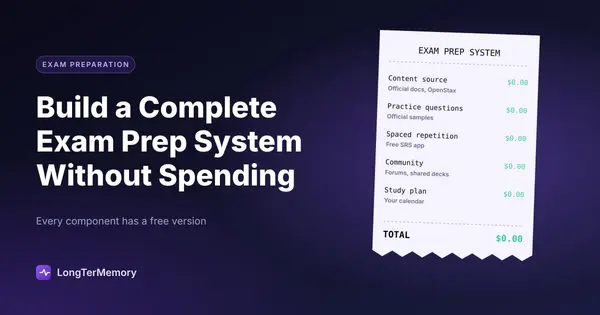
Before we hunt for free resources, let’s define what we are building. Strip away the marketing, and every effective exam prep system has five components:
| Component | What it does | Paid version | Free version |
|---|---|---|---|
| Content source | Teaches you the material | Video course | Official docs, OpenStax, YouTube |
| Practice questions | Tests application | Paid Qbank | Official samples, community banks |
| Spaced review | Fights forgetting | Premium flashcard apps | Free spaced repetition tools |
| Progress tracking | Directs your effort | Course dashboard | Simple spreadsheet |
| Study plan | Sequences everything | Course calendar | Self-built schedule |
If you cover all five, you have a complete system. Most people who fail with free resources fail because they only covered one or two, usually just the content source, and then wondered why watching videos did not translate into exam points. The system matters more than any single resource in it.
Free Spaced Repetition Apps and Open-Source Study Tools
Spaced repetition is the highest-leverage technique in exam prep, and it happens to be the best-served by free software.
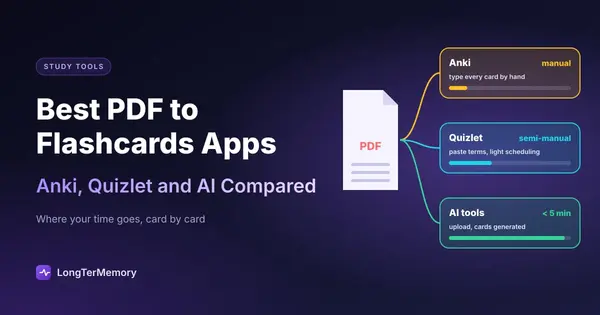
Anki is the open-source workhorse. It is free on desktop and Android, endlessly customizable, and supported by a massive ecosystem of shared decks. The interface looks like it was designed in 2006, because parts of it were, but the algorithm underneath is excellent. If your exam has a large community (medical boards, language tests, law), someone has probably already built a comprehensive shared deck you can download in minutes.
LongTerMemory takes a different approach to the same science. Instead of building cards by hand, you upload your study materials, PDFs, notes, web content, and the platform generates question-answer pairs automatically and schedules them with spaced repetition. The free trial at LongTerMemory lets you test the full workflow without paying anything, which makes it a genuinely useful component of a zero-budget system, especially when you are short on time. Manually creating a thousand flashcards can eat thirty or more hours; automating that step frees those hours for actual review.
A few other free tools worth knowing:
- Obsidian (free for personal use) for building linked notes, with community plugins that add spaced repetition on top
- Quizlet’s free tier for quick, simple decks, though the free version has become more limited over the years
- Google Sheets or LibreOffice Calc for a manual Leitner-style review schedule if you prefer full control
The tool matters less than the habit. Pick one, put your weakest material into it, and review daily. That single behavior outperforms most paid course features.
Official Free Practice Materials Hiding in Plain Sight
This is the most underused category of free resources, and often the highest quality one. The organizations that write your exam almost always publish free official materials, and official materials beat third-party ones because they reflect the real question style, difficulty, and scoring.
Some examples across common exam types:
- AWS certifications: AWS Skill Builder offers free digital courses, and every exam has a free official sample question set plus detailed exam guides
- USMLE: the “Free 120” official sample questions for each Step, released by the NBME
- SAT and AP exams: the College Board publishes full practice tests, and Khan Academy hosts free official SAT prep built in partnership with them
- PMP: PMI publishes the exam content outline that defines exactly what is tested, and many chapters offer free study group access
- Bar exams: the NCBE releases sample questions, and many state bar websites publish past essay questions with model answers
- Language certifications (DELF, IELTS, JLPT, Goethe): official past papers or complete sample exams are available directly from the certifying bodies
- CompTIA and other IT certs: official exam objectives are free and function as a precise study checklist
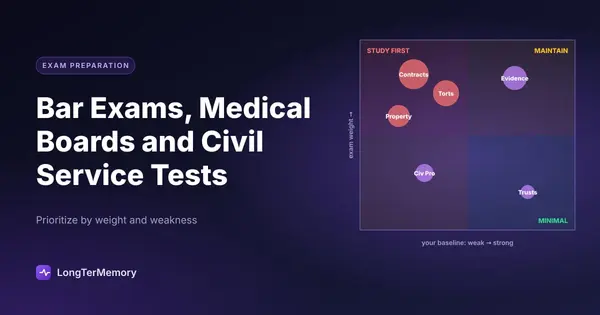
The pattern to remember: before you buy anything, go to the organization that administers your exam and collect everything free they publish. Exam guides, content outlines, sample questions, scoring rubrics. The content outline alone transforms your studying, because it tells you exactly what is fair game and what is not, and lets you allocate time by the actual weighting of each topic.
Free Content Sources for Learning the Material
For the teaching layer, the free options are deep:
- OpenStax publishes complete, peer-reviewed university textbooks for free
- MIT OpenCourseWare and other university OCW programs offer full course materials, including lecture notes and problem sets with solutions
- YouTube hosts entire high-quality course series for almost any technical subject, from organic chemistry to networking
- Official documentation for tech certifications is usually the ultimate source of truth, and it is always free
The catch with free content is that nobody curates it for you. That is what the exam content outline fixes. Use the outline as your table of contents and pull free resources to fill each line item, rather than passively consuming whatever a platform recommends next.
Community Resources: Study Groups, Forums, and Shared Decks
The third pillar of a free prep system is other people, and this is where free resources sometimes beat paid ones outright, because paid courses cannot replicate a community of thousands of current candidates.
Subreddits and forums exist for virtually every major exam. They are gold mines for three specific things: honest resource reviews (which free materials are actually good), recent exam experience threads (what the test emphasizes right now), and morale (proof that people fail, retake, and pass). Search the community for “free resources” and you will usually find a maintained megathread.
Shared flashcard decks deserve special attention. Communities around big exams maintain collaboratively edited decks that have been refined by thousands of users over years. A community deck with years of error corrections behind it is often more accurate than commercial products. Do check the deck matches the current exam version before committing to it.
Free study groups form constantly on Discord, Reddit, and through professional associations. A weekly one-hour session where you explain topics to each other adds two powerful free techniques to your system: teaching as retrieval practice and social accountability. If you cannot find a group, start one with a single post. “Studying for X, exam date Y, looking for 2-3 people for a weekly check-in” almost always gets replies.
One warning about community resources: they can become procrastination with extra steps. Reading about other people studying is not studying. Set a rule that forum time happens only after your daily review is done.
Assembling the System: A Weekly Structure
Here is how the free pieces fit together into an actual routine. Adjust the hours to your timeline, but keep the proportions:
| Activity | Share of study time | Free tool |
|---|---|---|
| Learning new material | 30% | OpenStax, OCW, official docs |
| Spaced repetition review | 30% | Anki or LongTerMemory |
| Practice questions | 30% | Official samples, community banks |
| Review of errors and planning | 10% | Spreadsheet tracker |
Notice that passive learning gets less than a third of the time. This is the proportion most self-studiers get wrong, spending 80% of their hours reading and watching, which feels productive and retains poorly. The research on retrieval practice is unambiguous: time spent testing yourself produces roughly twice the retention of time spent re-reading.
Your simple spreadsheet tracker needs only four columns: topic, confidence score from 1 to 5, last reviewed date, and error notes from practice questions. Five minutes of updating it each week tells you exactly where tomorrow’s effort should go, which is the entire function of those glossy course dashboards.
What You Give Up, and How to Compensate
Honesty time. A zero-budget system has real costs, they are just not financial:
You give up curation. Paid courses sequence everything for you. Compensate by building your study plan directly from the official exam content outline in your first session, before studying anything.
You give up polish. Free materials are scattered across sites and formats. Compensate by spending one setup session collecting everything into a single document of links, so daily studying never starts with a search.
You give up hand-holding. Nobody emails you when you fall behind. Compensate with a study group, a public commitment, or a calendar system that makes skipping visible.
What you do not give up is effectiveness. Every mechanism that makes prep courses work, structured content, active practice, spaced review, feedback loops, exists in free form. The students who pass with free resources are not luckier or smarter. They just built the complete system instead of collecting random materials.
Start With One Piece Today
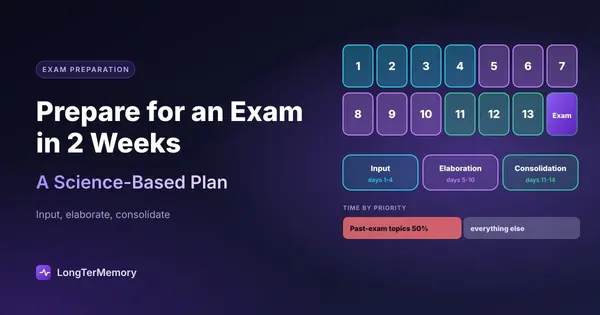
Do not try to assemble everything tonight. Systems built in a single enthusiastic evening tend to collapse within a week. Instead, sequence it:
- Today: download the official exam guide and content outline for your exam
- This week: set up your spaced repetition tool and add your first 20 cards, or upload your first document to LongTerMemory and let it build the cards for you
- Next week: locate the official free practice questions and take a small diagnostic set
- Week three: find your community and post one question or introduction
Four steps, four weeks, zero dollars, and you will have a prep system more complete than what many people get after spending a thousand. The money was never the active ingredient. The system is.