How Nutrition Affects Your Ability to Learn and Remember
Discover how nutrition and memory connect. Learn which brain foods support learning, which foods hurt focus, and how to eat during exam season.
Table of Contents
- Key Nutrients That Support Memory Formation and Retrieval
- Omega-3 Fatty Acids
- Antioxidants
- B Vitamins
- Choline
- Iron and Zinc
- Foods That Impair Focus and Learning Without You Realizing It
- Refined Sugar and White Flour
- Ultra-Processed Foods
- Excessive Caffeine
- Alcohol
- Hydration, Meal Timing, and Blood Sugar
- The Gut-Brain Connection
- Planning Ahead Reduces Decision Fatigue
- A Practical Eating Plan for Exam Season
- Breakfast
- Lunch
- Dinner
- Snacks
- Exam Day Nutrition
- Easy Food Swaps for Better Focus
- Supplements: What to Know
- Make It Easier With LongTerMemory
Most students think about study techniques, sleep, and caffeine when they want to improve their academic performance. Few think about what is on their plate. That is a mistake. The food you eat directly affects the neurotransmitters, blood flow, and inflammation levels that determine how well you can focus, encode memories, and retrieve them under pressure.
You do not need a perfect diet to study well. Small, consistent choices make a noticeable difference. Understanding the basics of nutrition and memory lets you protect your cognitive performance during heavy study periods without turning every meal into a chemistry experiment.
Key Nutrients That Support Memory Formation and Retrieval
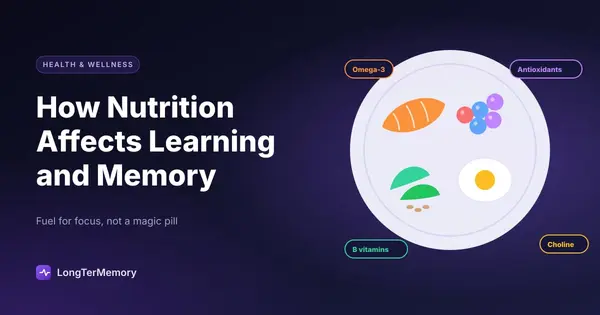
Your brain is an energy-hungry organ. Although it makes up only about two percent of your body weight, it consumes roughly twenty percent of your daily calories. The quality of those calories matters. Certain nutrients are especially important for learning and recall.
Omega-3 Fatty Acids
Omega-3s, particularly DHA, are major structural components of brain cell membranes. They support communication between neurons and may help with both memory formation and mood regulation. Good sources include fatty fish like salmon and sardines, walnuts, flaxseeds, and chia seeds. If you rarely eat fish, a small handful of walnuts is an easy study snack upgrade.
Antioxidants
Oxidative stress can damage brain cells over time and impair cognition. Antioxidants from colorful fruits and vegetables help protect against this. Berries, leafy greens, tomatoes, and citrus fruits are all excellent choices. Blueberries, in particular, have been studied for their potential to support memory in both younger and older adults.
B Vitamins
B vitamins, including B6, B9, and B12, play roles in neurotransmitter production and homocysteine regulation. Low levels of these vitamins have been linked to poorer memory and cognitive decline. You can find them in whole grains, eggs, legumes, leafy greens, and animal products.
Choline
Choline is a precursor to acetylcholine, a neurotransmitter involved in attention and memory. Eggs are one of the best dietary sources, especially the yolks. Soybeans and quinoa also provide meaningful amounts.
Iron and Zinc
Iron carries oxygen to the brain, and zinc supports nerve signaling. Deficiencies in either can lead to fatigue, difficulty concentrating, and weaker memory. Lean meats, beans, lentils, pumpkin seeds, and fortified cereals can help keep levels where they need to be.
The following table summarizes these nutrients and where to find them:
| Nutrient | Brain Role | Best Food Sources |
|---|---|---|
| Omega-3 fatty acids | Cell membrane health, neuron signaling | Salmon, sardines, walnuts, chia seeds |
| Antioxidants | Protection from oxidative stress | Berries, leafy greens, tomatoes, citrus |
| B vitamins | Neurotransmitter production | Whole grains, eggs, legumes, leafy greens |
| Choline | Acetylcholine synthesis | Eggs, soybeans, quinoa |
| Iron | Oxygen transport to the brain | Red meat, beans, lentils, spinach |
| Zinc | Nerve signaling and neurotransmission | Pumpkin seeds, beef, chickpeas, cashews |
Foods That Impair Focus and Learning Without You Realizing It
Just as some foods support cognition, others quietly undermine it. The biggest offenders are not mysterious. They are the convenient, high-sugar, ultra-processed options that show up everywhere during exam season.
Refined Sugar and White Flour
Sugary snacks and refined carbohydrates cause rapid spikes in blood glucose followed by sharp crashes. That crash brings fatigue, irritability, and difficulty concentrating. A donut might feel like a quick energy boost, but an hour later you are likely to feel foggy and distracted.
Ultra-Processed Foods
Chips, instant noodles, candy, and fast food are low in the nutrients your brain needs and high in additives, unhealthy fats, and sodium. Eating them occasionally is fine, but relying on them during a stressful study week can increase inflammation and reduce mental clarity.
Excessive Caffeine
Coffee and tea in moderate amounts can improve alertness and reaction time. Too much caffeine, however, leads to jitters, anxiety, disrupted sleep, and eventual crashes. If you find yourself needing more and more caffeine just to function, it is usually a sign that you need sleep and better meals, not another espresso.
Alcohol
Alcohol disrupts sleep architecture and impairs memory consolidation. Even a single drink in the evening can reduce the quality of the sleep your brain uses to solidify what you studied that day. During exam periods, it is worth keeping alcohol to a minimum or avoiding it entirely.
Hydration, Meal Timing, and Blood Sugar
Food is not the only nutritional factor that affects learning. Hydration matters more than most students realize. Even mild dehydration, just one to two percent below optimal, can reduce concentration and working memory. Keep a water bottle at your desk and sip throughout the day. If you wait until you feel thirsty, you are already behind.
Meal timing also plays a role. Going long stretches without eating causes blood sugar to drop, which leads to fatigue and irritability. On the other hand, eating very large meals can divert blood to your digestive system and make you sleepy. Aim for balanced meals at regular intervals, with small snacks if needed.
The Gut-Brain Connection
Another reason nutrition matters is the connection between your gut and your brain. The gut microbiome, the community of bacteria living in your digestive tract, influences inflammation, neurotransmitter production, and even mood. Diets rich in fiber, fermented foods, and a wide variety of plants tend to support a healthier microbiome. Yogurt, kefir, sauerkraut, kimchi, beans, lentils, and a colorful range of vegetables all feed the beneficial bacteria that may indirectly support cognitive function.
This does not mean you need to follow a strict diet. It simply means that the same foods that support overall health also tend to support learning. Adding more plants and fermented foods to your meals is a low-effort way to care for both your body and your brain.
Planning Ahead Reduces Decision Fatigue
Exam season is exhausting enough without deciding what to eat three times a day. Prepare simple meals and snacks in advance so you are not relying on vending machines or fast food when you are tired. A container of cut vegetables, cooked grains, and a protein source in the refrigerator can become a balanced meal in minutes. When healthy choices are easy, you are far more likely to make them.
A Practical Eating Plan for Exam Season
You do not need a rigid meal plan. You need a simple structure that keeps your blood sugar stable and your brain supplied with the right building blocks. Think in terms of protein, fiber, healthy fats, and hydration at every meal.
Breakfast
Start the day with protein and complex carbohydrates. Good options include eggs with whole-grain toast, oatmeal with nuts and berries, or Greek yogurt with fruit and seeds. Avoid sugary cereals or pastries that lead to a mid-morning crash.
Lunch
Build your plate around vegetables, a lean protein source, and a whole grain or legume. A chicken or tofu stir-fry with brown rice, a quinoa and bean bowl, or a salmon salad all work well. This combination provides steady energy through the afternoon.
Dinner
Keep dinner satisfying but not heavy. Large, greasy meals close to bedtime can disrupt sleep. Fish, lentils, vegetables, and a modest portion of whole grains are ideal. If you study late, add a small healthy snack such as a banana with almond butter instead of chips.
Snacks
Smart snacks keep your energy level between meals. Try a handful of nuts, an apple with peanut butter, hummus with vegetables, or dark chocolate with a few berries. Keep water nearby and sip regularly. Even mild dehydration can hurt concentration and working memory.
Exam Day Nutrition
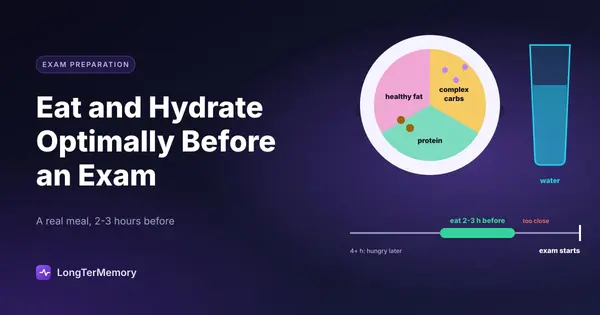
On the day of the exam, eat a familiar breakfast. This is not the time to experiment with new foods or supplements. Include protein, complex carbs, and some healthy fat. Drink enough water, but not so much that you are uncomfortable during the test. Avoid energy drinks and excessive coffee.
Easy Food Swaps for Better Focus
Small substitutions add up. Consider these simple upgrades:
- Swap sugary cereal for oatmeal with nuts and fruit.
- Replace chips with raw vegetables and hummus.
- Choose whole-grain bread instead of white bread.
- Drink water or herbal tea instead of sugary sodas.
- Snack on a hard-boiled egg instead of candy.
Supplements: What to Know
Whole foods should be your first choice. If you are considering supplements, start with the basics. A standard multivitamin can help fill small gaps, and vitamin D is worth discussing with a healthcare provider if you get little sunlight. Omega-3 supplements may help if you do not eat fish, but the evidence is mixed. Avoid high-dose stimulant supplements or anything that promises extreme focus. They are rarely worth the side effects.
Make It Easier With LongTerMemory
Good nutrition supports your brain, but it cannot replace effective study techniques. LongTerMemory helps you convert your notes and PDFs into spaced repetition flashcards, so the time you spend studying is used as efficiently as possible. When your review schedule is automated, you can focus on eating well, sleeping enough, and showing up to your exams sharp. Start your free trial and give your brain the study system it deserves.