
Most advice about studying focuses on what to study and how to study it. Active recall, spaced repetition, the Feynman technique, flashcards, practice tests. All of that is real and useful, and you should be using it.
But there’s a layer underneath all of it that most learners completely ignore: understanding how you personally learn. Not how humans learn in general, how you, specifically, retain and lose information. What times of day your focus peaks. Which topics your brain resists and which it embraces. Whether your sessions are actually as productive as they feel.
A study journal is how you figure all of that out. And once you know it, your studying becomes measurably more efficient, because you stop wasting time on approaches that don’t work for you and double down on the ones that do.
What Study Journaling Actually Looks Like in Practice
Let’s be clear about what this is and isn’t. A study journal is not a diary about your feelings. It’s not a gratitude log or a bullet journal aesthetic project. It’s a lightweight operational record of your study sessions, designed to generate insights you can act on.
It can be as simple as a notebook you keep next to your desk, or a notes file on your phone, or a dedicated app. The format matters far less than the habit.
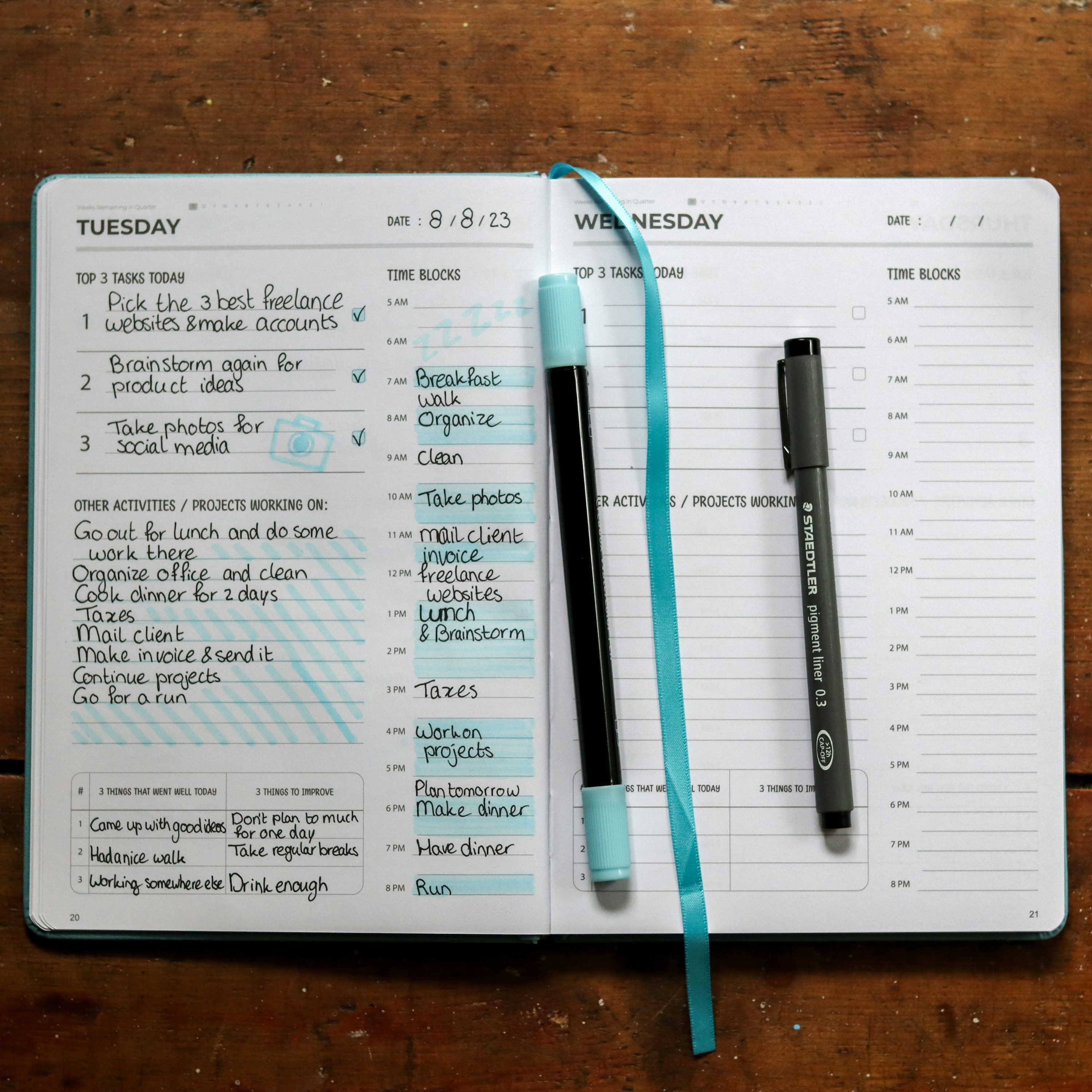
Here’s what a basic study journal entry looks like:
Date: Tuesday, April 14
Session: 7:30-9:00 PM, 90 minutes
Topic: Organic chemistry, nucleophilic substitution
Energy/Focus: 6/10, tired from work but forced through
Method used: Anki flashcards + wrote out mechanisms by hand
What felt solid: SN2 mechanism, the waltz analogy is clicking
What felt shaky: Still confusing SN1 vs SN2 with tertiary substrates
Notes: The hand-writing drill helped more than cards today. Try again tomorrow at this level before moving to elimination reactions.
That’s it. Five minutes, max. You’re not writing an essay, you’re logging operational data about your own learning.
Over time, a journal like this becomes a map of your study patterns. You start to see things that would be invisible without the record. The Tuesday evening sessions are consistently less productive. Organic mechanisms stick better when you draw them out. You always think you understand a topic right after reviewing it, but three days later half of it is gone.
You can’t fix problems you can’t see. The journal lets you see them.
Using Reflective Writing to Identify Patterns in Your Learning
This is where journaling graduates from logging to genuine metacognition, which is the technical term for thinking about your own thinking. It’s one of the strongest predictors of academic success in the research literature, and it’s something most students never deliberately cultivate.
After a week or two of basic logging, start looking for patterns. Once a week, spend ten minutes reviewing your entries and asking yourself a few key questions:
What topics am I making genuine progress on?
Which subjects are you finishing sessions feeling solid about, and that feeling holds up when you’re tested later? Those subjects deserve to stay on your current schedule. Don’t spend extra time on what’s already working.
Where am I lying to myself about my understanding?
Fluency illusion is real. Re-reading your notes or reviewing familiar flashcards gives you a warm sense of familiarity that your brain mistakes for mastery. Look for topics where you consistently feel confident during review but perform worse than expected on practice tests. That gap is the lie. Your journal will show it.
What conditions produce my best sessions?
Are morning sessions better than evening ones? Do you retain more when you’re in the library versus at home? Does a study session right after exercise outperform one after a heavy meal? You have data on all of this in your log. Use it to deliberately stack the conditions that work.
Am I avoiding anything?
Most learners naturally gravitate toward topics they’re already good at. It feels productive and comfortable. Your journal might reveal that you’ve logged eight sessions on material you understand well and only two on the topic giving you the most trouble. That’s backwards, and you wouldn’t know it without the record.
Are my sessions the right length?
Research on sustained focus suggests that productivity drops significantly after 90 minutes of concentrated work. But many students either power through for hours (with diminishing returns they don’t notice) or give up after twenty minutes when they hit resistance. Your journal, honestly filled, will show you what session length actually produces retention versus what just feels like effort.
A simple weekly review template
| Question | Your answer |
|---|---|
| What did I actually learn this week (not just review)? | |
| Which topic am I most uncertain about going into next week? | |
| What one thing would I change about how I studied this week? | |
| What worked so well I should do it again? |
Five minutes, once a week. These four questions alone will change how you allocate your study time.
Combining Journaling With Spaced Review for Metacognitive Growth
Here’s where things get genuinely powerful: using your journal to supercharge your spaced repetition practice.
Spaced repetition software like Anki is excellent at scheduling when you should review material. But it doesn’t know the difference between a card you got right because you truly know it and a card you got right because you guessed and got lucky. It doesn’t know that the concept behind the card is actually confusing you even when you answer correctly. And it has no idea that you consistently confuse two related concepts even though your card performance doesn’t reflect it.
Your journal does know those things, because you wrote them down.
The confusion log
One of the most valuable additions to a study journal is a dedicated section for confusions, things you understood during the session but suspect you’ll forget, or things that came out right but only after a moment of uncertainty. These are the items that live in your retention danger zone: solid enough to pass an SRS review but fragile enough to collapse under exam pressure.
Track these separately. When a confusion item reappears in your journal multiple times across different sessions, that’s a signal to attack it differently. Make a new card from a different angle. Create an analogy. Write a short explanation of it as if teaching someone else. The confusion is not random, it’s a specific gap in your mental model that requires a targeted intervention.
The prediction test
Before each study session, write down your prediction: “After this session, I will be confident about X but still shaky on Y.” After the session, check your prediction. Over time, you’ll get better at accurately estimating your own understanding, which is a crucial skill for exam performance. Students who can’t accurately assess what they know tend to under-prepare on weak topics and over-prepare on strong ones.
The decay check
Once a week, pick one topic from your journal entries from two weeks ago, something you logged as “solid.” Don’t look at your notes. Just try to write down everything you remember about it. Then compare what you produced to what you recorded in your journal.
This is a homemade delayed recall test, and it’s one of the most honest reality checks you can run on yourself. If the solid topic is still solid, great. If it’s decayed more than expected, your spaced repetition schedule isn’t working for that material and you need to reset the intervals or change your card format.
Making It a Habit Without Making It a Burden
The biggest risk with any journaling system is that it becomes an overhead task that feels like chore and gets abandoned within two weeks. Here’s how to avoid that:
Keep it short. Five minutes per session, ten per week review. If your journal entries are taking longer than that, you’re writing too much. This is operational data, not literature.
Keep it consistent, not perfect. A brief entry every day beats a thorough entry twice a week. The pattern recognition only works if the data is actually there to analyze. Miss a session? Don’t catch up by doubling the next entry. Just continue.
Don’t judge what you write. The journal is diagnostic, not evaluative. Writing “I completely zoned out for the last thirty minutes and wasted the session” is valuable information. It tells you something about your energy management or topic sequencing. It’s not a failing grade. Treat it like a scientist recording experimental results, neutral, honest, curious.
Keep it analog if possible. There’s something about handwriting that makes reflection more deliberate. Digital notes tend to become lists of bullet points. A physical journal tends to produce more honest, nuanced writing. This is not a hard rule, use whatever format you’ll actually maintain, but worth trying if you’re on the fence.
What Experienced Learners Actually Use Journals For
Students who’ve been using study journals for months or years tend to develop very specific personal use cases that go beyond the generic templates.
Some use their journal as a pre-session activation ritual: writing one to three questions they want to answer in the upcoming session helps focus the mind and gives the session a clear purpose beyond “study chemistry for an hour.”
Others use it as a post-session synthesis tool: the act of writing a summary of what they covered, in their own words, without looking at notes, is itself a retrieval practice. You’re testing yourself on the session while the session is fresh, which captures more than a standard SRS card would.
Some learners keep a concept map log: after covering a new topic, they draw a quick diagram in their journal showing how the new material connects to things they already know. This forces integration rather than isolated fact storage, which is where deep understanding comes from.
And many use it simply as an accountability record: a visual history of sessions completed is genuinely motivating. There’s a reason apps like Duolingo make streak counts such a prominent feature. Seeing your own consistency, even in a simple paper journal, builds the identity of being someone who shows up consistently.
The Bottom Line
A study journal doesn’t replace active recall, spaced repetition, or any of the other science-backed learning techniques. What it does is make all of those techniques more effective by giving you the self-knowledge to apply them where they’re actually needed.
Most students study based on feeling. They review what feels familiar, study during times that feel comfortable, and spend time on topics that feel manageable. The journal replaces feeling with data. And data-driven studying consistently outperforms intuitive studying.
LongTerMemory builds on this philosophy by automating the material side of your study practice, turning your notes and readings into ready-to-review flashcards optimized for spaced repetition. Pair it with a study journal to track how those sessions are actually working for you, and you have a system that gets smarter the longer you use it.
Start simple. A notebook. A pen. Five minutes after your next session. That’s all it takes to begin.