
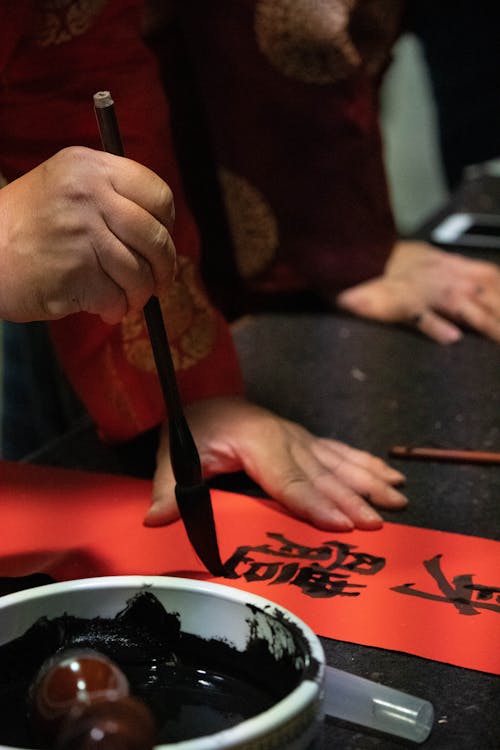
Let me guess. You picked up Mandarin, got through pinyin without too much trouble, maybe started having simple conversations, and then you hit the wall. The wall that every Chinese learner hits sooner or later: Chinese characters.
Thousands of them. And unlike an alphabet where letters combine predictably, each character is its own little piece of art with its own meaning, sound, and stroke order. It feels like trying to memorize a library one painting at a time.
Here’s the thing though: people do it. Millions of people, including plenty of adults who started from scratch, have learned to read and write Chinese. The difference between those who make it and those who give up usually comes down to method, not memory. And the method that works best for characters, bar none, is spaced repetition.
Why Chinese Characters Are Actually Learnable
Before we get into the system, let’s address the mental block. Many learners look at characters and assume they’re purely arbitrary. You just have to stare at them until they stick, right?
Wrong. The vast majority of Chinese characters are not random. They have structure. They’re built from components called radicals (or more precisely, components and radicals), and once you understand that structure, you stop memorizing thousands of independent symbols and start recognizing patterns.
Think of it like learning to read music. At first, the notes on a staff look like dots scattered randomly. Then you learn what the lines mean, what a quarter note is versus an eighth note, how keys work, and suddenly the chaos resolves into logic. Characters are the same.
There are roughly 200 radicals that appear across thousands of characters. When you recognize them, you start to see characters the way a native reader does, as combinations of familiar components, not as inscrutable blobs of ink.
Radical-Based Learning: How Character Components Aid Memorization
This is where you start, before apps, before flashcards, before anything else. Spend a week or two getting familiar with the most common radicals and what they mean.
Here are some of the most frequently occurring radicals and their meanings:
| Radical | Meaning | Example Character |
|---|---|---|
| 氵(water) | relates to liquids or flowing | 海 (sea), 河 (river) |
| 木 (wood/tree) | relates to wood or plants | 树 (tree), 椅 (chair) |
| 口 (mouth) | relates to speaking or eating | 说 (speak), 吃 (eat) |
| 女 (woman) | relates to gender or family | 妈 (mom), 她 (she) |
| 心 (heart) | relates to feelings or mind | 想 (think/miss), 忘 (forget) |
| 手 (hand) | relates to actions or manipulation | 打 (hit), 拿 (hold) |
Once you know these building blocks, a character like 洗 (to wash) starts to make sense: the water radical on the left, the phonetic component on the right. You’re no longer looking at a mystery, you’re reading a visual system.
How to build this foundation:
Learn the top 50 most common radicals first. Don’t try to memorize all 200 in one go. Use a short, dedicated flashcard set or even a printed reference sheet. The goal at this stage isn’t perfection, it’s pattern recognition. You want your eye to start automatically pulling out familiar components when you look at a character.
Once you can recognize the basic radicals, the payoff is immediate. New characters start triggering connections instead of just staring back blankly.
Spaced Repetition Apps for Chinese Character Retention
Now we get to the engine that powers modern language learning: spaced repetition software (SRS). If you’re not using this, you’re leaving enormous efficiency gains on the table.
The core idea: instead of reviewing everything at the same frequency, spaced repetition schedules each character for review right before you’re about to forget it. Characters you find easy get reviewed less often. Characters you struggle with come back sooner. The algorithm adapts to you.
Over time, this means the things you know stay known with minimal review time, while the things you’re shaky on get extra attention. It’s a completely different experience from cramming.
The main SRS tools for Chinese characters
Anki is the gold standard. It’s free (on desktop and Android, paid on iOS), endlessly customizable, and has enormous shared decks specifically for Chinese. The most popular pre-made decks cover HSK vocabulary (the official Mandarin proficiency levels from HSK 1 to HSK 6), often with traditional and simplified characters, pinyin, example sentences, and audio.
You can also build your own cards, which is genuinely one of the best learning strategies there is. When you encounter a new character in a reading or a class, pause and add it to your deck. Cards you’ve made yourself are stickier than pre-made ones because you have context for them.
Pleco is another essential for any serious Chinese learner. It’s primarily a dictionary app, but its built-in flashcard system is excellent and tightly integrated with its character database. When you look up a word, you can add it to your flashcard queue directly. No friction, no copy-pasting.
The Mandarin Blueprint and Remembering the Hanzi (a book, not an app) use a slightly different approach called mnemonics, building a visual story for each character to make it memorable. This works brilliantly for some learners, especially visual thinkers. The downside is it takes more upfront time to set up the mental images.
How to structure your daily practice
Consistency beats intensity, every time. Thirty minutes a day of spaced repetition will outperform two-hour cramming sessions on weekends. Here’s a simple structure that works:
- Morning (10-15 minutes): Do your Anki reviews. These are cards due for review based on the algorithm. Don’t skip this, it’s the maintenance work that keeps previously learned characters from decaying.
- Study session (20-30 minutes): New input, whether that’s a lesson, a textbook chapter, a graded reader, or a video. As you encounter new characters, note them.
- End of session (5-10 minutes): Add new cards from today’s input. Don’t add too many at once. Ten to twenty new cards a day is a comfortable pace for most people. More than that and your review pile grows faster than you can handle it.
The most common mistake learners make with SRS is neglecting the reviews. Adding new cards without reviewing old ones is like filling a bathtub with the drain open. You feel like you’re doing work, but the characters aren’t actually entering long-term memory.
Writing Practice Combined With Spaced Review for Lasting Character Memory
Here’s the part a lot of digital-first learners skip, and they often regret it: writing by hand.
There’s substantial research showing that the physical act of writing characters, drawing each stroke in the correct order, deepens memory in a way that recognition alone doesn’t. The motor system creates a different kind of memory trace. When you’ve written a character fifty times, you can often recall it even when the visual recognition fails, because your hand remembers.
This isn’t just nostalgia for old-school methods. It’s neuroscience.
How to integrate writing into your spaced repetition practice
The simplest approach is to add a writing component to your Anki reviews. When a card comes up, before you flip it to check the answer, try writing the character from memory on a piece of scratch paper or a whiteboard. Then check. This forces actual recall rather than passive recognition.
A more structured approach is dedicated stroke-order practice. Apps like Skritter make this digital, prompting you to draw characters on screen with immediate feedback on stroke order. It combines spaced repetition with writing practice in one tool. It’s subscription-based but many learners find it worth the cost.
For purely offline practice, the classic approach of getting squared practice paper (方格纸, fānggézhi) and drilling characters in small batches still works extremely well. Pick five to ten characters you’re currently learning, write each one ten times, focusing on stroke order and proportion, then put the paper away and try to write them again from memory twenty minutes later. Simple, free, and remarkably effective.
On stroke order: Yes, it matters, but not because Chinese teachers will scold you. It matters because correct stroke order is how characters are designed to be written efficiently, and learning it correctly from the start means your handwriting will look right and your hand memory will build on a solid foundation. Learning the wrong stroke order and then unlearning it later is considerably harder than just getting it right the first time.
Building Your Learning System
Here’s what a solid Chinese character study system looks like in practice:
Phase 1, Radical foundation (weeks 1-2): Learn the top 50-100 radicals. Use a small Anki deck or a printed reference. Don’t rush this phase, it pays dividends for everything that follows.
Phase 2, Core vocabulary + SRS (ongoing): Start adding characters systematically. Many learners work through HSK levels in order (HSK 1 = 150 words, HSK 2 = 300 words, etc.) because the vocabulary is well-documented and leveled. Others prefer to start with high-frequency characters from the most common Chinese word lists. Either works, the key is having a structured list to work through rather than learning random characters.
Phase 3, Reading + active review (once you have 200-300 characters): Start exposing yourself to real text as soon as possible. Graded readers exist specifically for learners at different levels. Even reading a simple children’s book where you know 80% of the characters is enormously valuable for building reading fluency and making the characters feel real rather than abstract.
Phase 4, Immersion integration: Watch Chinese content with Chinese subtitles. Read simplified texts. Follow Chinese social media accounts that interest you. The characters you’ve learned through SRS start appearing in real contexts, and each reinforcement makes them stickier.
Common Mistakes That Slow You Down
Learning Chinese characters is genuinely hard, but a lot of the pain comes from avoidable mistakes.
Trying to learn characters isolated from vocabulary. Characters carry meaning, but the meaning usually comes alive in words. 火 (fire) is a character, but 火车 (fire vehicle = train) and 火锅 (fire pot = hot pot) are the words you’ll actually use. Learn characters in the context of common words from the start.
Adding too many new cards at once. It feels productive to blast through a hundred new characters in a study session. It isn’t. Your review pile will become unmanageable within days and the new additions won’t be retained anyway. Sustainable beats fast.
Skipping tones. Every character has a tone. Every tone matters. If you’re using SRS, make sure your cards include audio so you’re building the character-sound connection from day one. Learning to read characters without their tones is like learning to read music without rhythm. Technically possible, practically crippling.
Treating recognition and production as the same skill. Recognizing a character when you see it and being able to write it from memory are completely different cognitive tasks. Your SRS should include production cards (where you see the meaning and have to produce the character) not just recognition cards (where you see the character and recall the meaning).
The Long Game
Learning to read and write Chinese is genuinely one of the more challenging things an adult learner can take on. It takes sustained effort over years, not weeks. But the method described here, radical awareness, spaced repetition, and regular writing practice combined, is the most efficient path there is.
The learners who give up usually do so because they’re working against their memory rather than with it. They review things they already know instead of focusing on what they’re forgetting. They add more cards than they review. They skip writing practice and then discover their recall is fragile.
The learners who succeed treat it like a daily habit rather than a cramming exercise. Twenty minutes of SRS review in the morning, reading Chinese content in the evening, a bit of writing practice during the week. Not glamorous, but remarkably effective.
LongTerMemory is built specifically for this kind of systematic, spaced learning. It lets you upload your study materials, whether that’s a Chinese textbook, character lists, or vocabulary sheets, and automatically generates flashcard sets optimized for spaced repetition. If you’re building a Chinese character study system, it can save you a lot of the manual card-creation work that slows learners down.
The wall is real. But it has doors in it. You just need the right keys.
Quick Reference: Chinese Character Study System
| Stage | Focus | Tool | Time/Day |
|---|---|---|---|
| Foundation | Learn top 100 radicals | Anki radical deck | 10-15 min |
| Core vocab | HSK or frequency list characters | Anki + Pleco | 20-30 min |
| Writing | Stroke order + production recall | Skritter / paper | 10-15 min |
| Input | Reading graded texts + real content | Graded readers, apps | 20-30 min |
| Review | Daily SRS due cards | Anki | Never skip |