How to Use Rewards and Incentives to Study Consistently
Learn how to use rewards and incentives to study consistently without hurting motivation. Build a personal reward system that reinforces your habits.
Table of Contents
- The Difference Between Rewards That Reinforce Habits and Those That Undermine Them
- Immediate vs. Delayed Rewards in Building Consistent Study Behavior
- The Science of Dopamine and Habit Loops
- Designing a Personal Reward System for Study Milestones
- Step 1: Define Your Study Sessions Clearly
- Step 2: Choose Rewards That Fit Your Life
- Step 3: Match the Reward to the Effort
- Step 4: Track Your Streaks
- Step 5: Review and Adjust
- Examples of Milestone Rewards
- What to Do When Rewards Stop Working
- Avoiding Common Reward Mistakes
- Combining Rewards With Effective Study Techniques
- Make It Easier With LongTerMemory
Studying consistently is rarely a problem of knowledge. Most students know what they should be doing. The hard part is doing it day after day when the results feel far away and the distractions feel immediate. That is where a well-designed reward system can help. Used correctly, rewards turn studying from a chore you avoid into a habit you maintain.
The trick is understanding that not all rewards work the same way. Some reinforce the behavior you want. Others accidentally undermine it. Learning the difference is the key to using study rewards effectively.
The Difference Between Rewards That Reinforce Habits and Those That Undermine Them
Rewards are powerful because they link a behavior to a positive outcome. When your brain expects something good after studying, the studying itself becomes more attractive. Over time, the external reward can become less necessary as the habit becomes self-sustaining.
However, rewards can backfire if they are too large, too disconnected from the behavior, or used as bribes rather than recognition. For example, promising yourself a new gaming console for finishing a chapter can make studying feel like a punishment you endure for the prize. It can also make the reward so salient that you lose interest in the work itself.
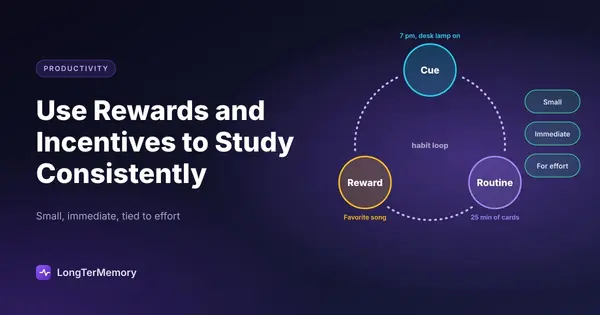
A better approach is to use small, immediate rewards that celebrate the effort rather than the outcome. Finishing a focused study session might earn you a cup of tea, a short walk, or 10 minutes of music. These rewards acknowledge the behavior without overshadowing it. They say, “I did the work, and now I get a small treat,” rather than, “I suffered, and now I need to be paid off.”
The following table contrasts rewards that help with rewards that hurt:
| Reward Type | Effect on Motivation | Example |
|---|---|---|
| Small and immediate | Reinforces the habit | A short break after a Pomodoro session. |
| Tied to effort, not outcome | Builds consistency | Listening to a favorite song after reviewing flashcards. |
| Meaningful but not excessive | Sustains interest | A nice coffee after a full study day. |
| Large and distant | Undermines intrinsic interest | A vacation only if you pass the exam. |
| Used as a bribe | Creates resentment | ”I will buy you dinner if you just study.” |
| Guilt-based | Adds pressure and anxiety | ”I do not deserve fun until I finish everything.” |
Immediate vs. Delayed Rewards in Building Consistent Study Behavior
Immediate rewards are usually better for building new habits. When you are trying to study every day, the long-term payoff of passing an exam is too far away to keep you going. A small reward at the end of each session gives your brain a dopamine hit right when the behavior is still fragile.
Delayed rewards, on the other hand, are useful for maintaining motivation over longer cycles. A planned weekend activity after a hard week of studying, or a small purchase after completing a major milestone, can give you something to look forward to. The best systems use both: immediate rewards for daily consistency and delayed rewards for bigger achievements.
The danger of delayed rewards is that they can feel abstract. If the exam is three months away, the promise of a celebratory dinner then may not feel real today. To make delayed rewards work, break the timeline into smaller checkpoints and attach rewards to each one. Completing a chapter, finishing a practice test, or maintaining a seven-day streak are all worthy of recognition.
The Science of Dopamine and Habit Loops
Rewards work because they trigger dopamine, a neurotransmitter associated with motivation and pleasure. When dopamine is released after a behavior, your brain learns to associate that behavior with a positive outcome. Over time, the cue of opening your study materials can trigger a small anticipatory dopamine release on its own.
This is the basis of the habit loop: cue, routine, reward. The cue might be a specific time of day or a notification from your study app. The routine is the study session. The reward is the small treat or break that follows. By repeating this loop, you make studying feel automatic rather than forced.
Designing a Personal Reward System for Study Milestones
A good reward system is personal, predictable, and proportional. It should match your own values and interests, happen reliably after the behavior, and scale with the difficulty of the task.
Step 1: Define Your Study Sessions Clearly
A reward should follow a specific, completed action. “Study more” is too vague. “Complete two 25-minute Pomodoro sessions of biology flashcards” is specific. When the goal is clear, you know exactly when you have earned the reward.
Step 2: Choose Rewards That Fit Your Life
Rewards do not need to cost money. Some of the most effective rewards are activities you already enjoy but often feel guilty doing: reading a novel, watching a short video, calling a friend, or playing a quick game. The key is that the reward feels genuinely pleasant and is limited enough that you can return to studying afterward.
Step 3: Match the Reward to the Effort
Small efforts earn small rewards. Larger efforts earn larger rewards. This keeps the system fair and prevents reward inflation. If every minor task earns a major prize, the prizes stop feeling special and motivation suffers.
Step 4: Track Your Streaks
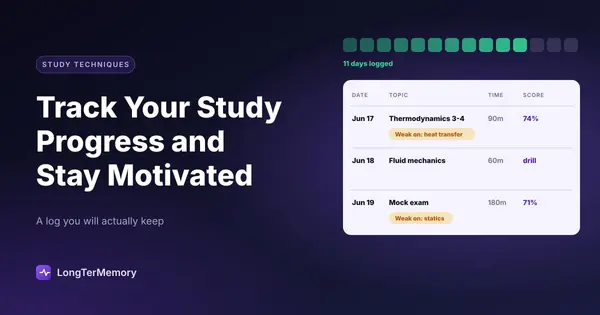
Visible progress is motivating. Use a calendar, habit tracker, or app to mark each day you complete your study goal. Seeing a chain of successful days creates its own psychological reward, and you become less willing to break the streak. Just be careful not to let one missed day derail you. The goal is consistency over time, not perfection.
Step 5: Review and Adjust
Your reward system should evolve as your habits strengthen. Early on, you may need frequent external rewards. After a few weeks, the internal satisfaction of knowing the material may become enough for daily sessions. Keep checking in with yourself and adjusting the rewards so they continue to feel motivating rather than mechanical.
Examples of Milestone Rewards
Here are some proportional reward ideas for different study achievements:
- Complete one focused session: a 10-minute walk or a favorite snack.
- Finish a full chapter: an episode of a show or a longer break.
- Maintain a seven-day streak: a coffee from your favorite shop.
- Hit a practice test goal: a movie night or a small purchase.
- Finish the entire study plan: a meaningful experience or gift to yourself.
What to Do When Rewards Stop Working
Sometimes a reward system loses its power. The usual culprit is overuse or mismatched rewards. If a reward no longer feels special, make it smaller, rarer, or more tied to genuine effort. If you feel like you are bribing yourself, shift toward intrinsic motivators such as curiosity, mastery, or connection to your long-term goals.
Accountability can also help. Tell a friend or family member about your reward system, or join a study group where others are working toward similar goals. External accountability adds a social dimension that rewards alone cannot provide.
Avoiding Common Reward Mistakes
One common mistake is rewarding yourself before the work is done. A treat eaten during procrastination is not a reward, it is avoidance. Another mistake is making rewards so restrictive that you feel miserable. A healthy reward system should feel supportive, not punitive. Finally, avoid comparing your reward system to anyone else’s. What motivates one student may leave another cold. Choose rewards that genuinely appeal to you, even if they seem small or unusual to other people.
It can also help to keep a written record of your rewards and how they felt. After a week or two, review which rewards actually motivated you and which ones you ignored. This simple reflection lets you fine-tune your system so it stays effective over the long term. Remember that the ultimate goal is to make studying feel less like a battle and more like a normal, rewarding part of your daily routine. With the right rewards in place, consistency becomes something you can actually maintain.
Combining Rewards With Effective Study Techniques
Rewards make it easier to start studying, but they do not make studying more effective on their own. Pair your reward system with evidence-based techniques like retrieval practice, spaced repetition, and active recall. That way, every rewarded session is also a productive one.
For example, you might reward yourself after completing a flashcard review session in LongTerMemory, after writing a practice essay from memory, or after finishing a timed problem set. The reward reinforces the habit, while the technique ensures the habit is worth keeping.
Make It Easier With LongTerMemory
Consistency is easier when the study process itself feels manageable and rewarding. LongTerMemory removes the friction from daily review by turning your PDFs and notes into spaced repetition flashcards automatically. Instead of dreading the work of making cards, you can focus on answering them and earning your well-deserved breaks. If you are building a long-term study habit, start your free trial and let LongTerMemory handle the scheduling while you handle the showing up.