There’s a persistent piece of study advice that gets repeated so often it starts to sound like fact: mornings are for studying, nights are for sleeping, and anyone cramming past 10 p.m. is doing it wrong. And yet, walk past any library or dorm common room at midnight and it’s full of people, headphones on, highlighters out, clearly getting something done.
So which is it? Is nighttime studying a productivity trap, or does it genuinely work for some people? The honest answer is more interesting than either extreme: it depends heavily on why you’re doing it, and how you’re doing it. Let’s get into the actual trade-offs.
The Cognitive Trade-Offs of Studying Late at Night
Your brain isn’t equally sharp at every hour, and that’s not a matter of habit or preference, it’s a matter of biology. Your body runs on a roughly 24-hour internal clock, your circadian rhythm, which governs when you naturally feel alert versus drowsy, largely independent of how much sleep you got the night before.
For most people, alertness and certain kinds of cognitive performance, particularly tasks requiring sustained focus and working memory, tend to be higher in the late morning and again in the early evening, with a dip in the early afternoon and a steady decline as the night wears on. Late at night, your brain is working against its own biological pull toward sleep, which takes real effort to override.
That said, this isn’t uniform across everyone. Roughly a quarter to a third of the population leans toward a genuine night owl chronotype, a biologically later internal clock where alertness peaks later in the day and stays reasonably strong into the evening. For these people, 9 or 10 p.m. isn’t fighting their biology at all, it’s closer to their actual cognitive peak.
There’s also a specific benefit night owls sometimes get that’s easy to overlook: quiet. If your household, dorm, or apartment is genuinely calmer after everyone else has gone to bed, some of what feels like “better focus at night” is really just “fewer interruptions at night,” which is a real and legitimate advantage regardless of your chronotype.
The trade-off, though, is real for almost everyone: study late enough, and you’re borrowing against tomorrow’s sleep, tomorrow’s alertness, and (if you do this repeatedly) your ability to consolidate what you just studied into long-term memory. That last part matters more than most people realize.
Why Sleep Right After Studying Actually Matters
Here’s the piece of the night-studying conversation that rarely gets enough attention: sleep isn’t just downtime after studying, it’s an active part of the memory-forming process. During sleep, particularly the deeper stages, your brain replays and consolidates the information you engaged with while awake, strengthening the neural connections that hold it in long-term memory.
This means a late-night study session that’s immediately followed by a full night’s sleep can actually work quite well, you’re studying, then handing the material straight to your brain’s consolidation process with minimal delay. The problems show up when late-night studying eats into the sleep that’s supposed to follow it. Staying up until 2 a.m. to study, and then getting up at 6:30 for an early class, doesn’t just cost you four and a half hours of sleep, it substantially undercuts the consolidation of the very material you just spent hours learning.
Our guide on sleep and memory consolidation goes deeper into the mechanism here, but the short version for night studiers is this: the value of a late study session depends heavily on whether you protect the sleep that follows it, not just on what time you started.
How to Protect Sleep When Nighttime Is Your Only Study Window
For a lot of people, night studying isn’t really a preference, it’s a scheduling necessity. Work during the day, classes in the evening, family responsibilities that only free up after everyone else is asleep. If that’s your situation, the goal isn’t to avoid studying at night, it’s to structure the night so studying doesn’t cannibalize the sleep you need to actually remember any of it.
Set a hard stop time, and treat it like an appointment. Open-ended late-night study sessions have a way of drifting an extra hour, then two. Decide in advance when you’re stopping, regardless of whether you feel “done,” and build in enough buffer afterward for your brain to wind down before sleep.
Front-load the hardest material and save easier review for the tail end. Your focus is more likely to degrade as the session goes on, so tackle new, difficult concepts earlier in the session, and shift toward lighter review, flashcards, quick recall drills, as you get closer to your stop time.
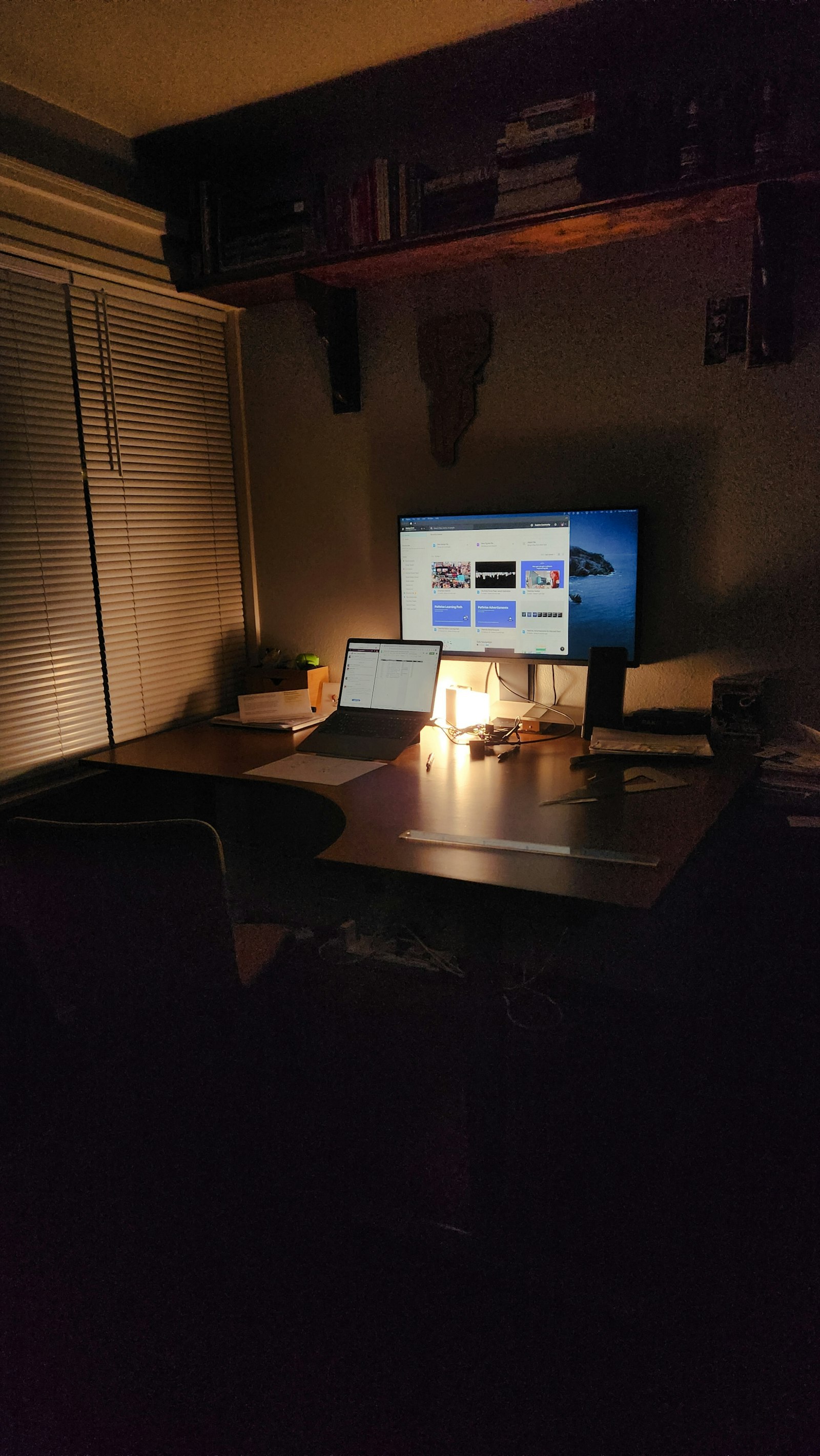
Dim the lights and avoid bright screens in the final 30 to 45 minutes. Bright light, especially blue-heavy light from phone and laptop screens, suppresses melatonin and can make it noticeably harder to fall asleep promptly after you close your books. A warm desk lamp and, if possible, a night-mode screen setting in the final stretch make the transition to sleep considerably smoother.
Avoid caffeine within roughly six hours of your intended bedtime. It’s tempting to use caffeine to push through a late session, but caffeine’s half-life means a dose at 9 p.m. can still be meaningfully active in your system at 3 a.m., quietly undermining the very sleep you’re relying on to consolidate what you just studied.
Night Study Rituals That Minimize Impact on the Next Day
Even with good habits during the session itself, a few end-of-session and next-morning routines make a real difference in how much a late night costs you.
Do a brief wind-down, not an abrupt stop. Closing your laptop mid-thought and immediately trying to sleep often leaves your mind still churning on unfinished material. A five-minute wind-down, jotting down anything unresolved so it’s captured rather than looping in your head, tends to make falling asleep noticeably easier.
Protect your morning, even if it means sleeping in slightly. If you studied until midnight, treating the next morning identically to a normal early morning defeats the purpose. Where you have any flexibility, push your first commitment back rather than stacking sleep debt on top of sleep debt.
Get bright light and movement as soon as you wake up. This resets your circadian signal for the day and helps offset some of the grogginess that comes from a shortened or late-shifted sleep window.
Don’t make it your default, even if it works occasionally. A late-night session before a single deadline is very different from a semester-long pattern of nightly late studying. The former is a manageable trade-off; the latter accumulates into chronic sleep debt, which degrades memory, mood, and academic performance in ways that are much harder to reverse.
| Chronotype | Night studying tends to work | Best approach |
|---|---|---|
| Night owl | Well, if sleep follows promptly | Study, then sleep without delay |
| Morning type | Poorly, fighting natural rhythm | Reserve nights for light review only |
| Unsure / variable | Case by case | Track a week of energy levels to find your pattern |
Figuring Out Your Own Pattern
Rather than relying on general chronotype categories to decide whether night studying works for you, it’s worth running a short, honest self-experiment. For one week, rate your focus and energy on a simple 1-to-5 scale at three points each day, mid-morning, mid-afternoon, and late evening, and jot down what you were doing at each check-in. Don’t try to plan around the results yet, just observe.
At the end of the week, look at the pattern rather than any single day. Most people find a fairly consistent peak window shows up across the seven days, and it’s often less dramatic than “night owl” or “morning person” makes it sound, more like a two-to-three-hour window where focus is reliably a notch higher than the rest of the day. That window, wherever it falls, is where your hardest material belongs. Everything else can flex around it.
So, Is Studying at Night Actually Bad?
Not inherently. The research doesn’t support a blanket rule that nighttime study is worse for everyone, because chronotype genuinely varies, and quiet, low-distraction hours are a real asset for a meaningful share of students. What the research does support is that the sleep that follows a late study session is doing real cognitive work, and treating that sleep as optional or expendable is where night studying goes wrong.
If you’re a genuine night owl who protects a full sleep window afterward, late study sessions can be just as effective as morning ones, sometimes more so. If you’re pushing yourself to study late against your own biological rhythm, and then cutting sleep short to do it, you’re very likely getting less out of those hours than the same time spent studying earlier in the day.
The Bottom Line
Night studying isn’t a mistake by default, and it isn’t a hack by default either. It’s a trade-off that depends on your chronotype, your environment, and, most importantly, whether the sleep that follows actually happens. Know which category you fall into, protect your sleep window like it’s part of the studying itself (because it is), and adjust your approach based on what your own energy levels tell you across a week or two of honest observation.
Whatever hours you end up studying, what actually determines whether the material sticks is consistent review over time, not the specific clock time you sat down. LongTerMemory schedules your spaced repetition reviews around whenever you’re actually available, morning, evening, or late at night, so the timing of your sessions can fit your real schedule instead of forcing you into someone else’s ideal routine.