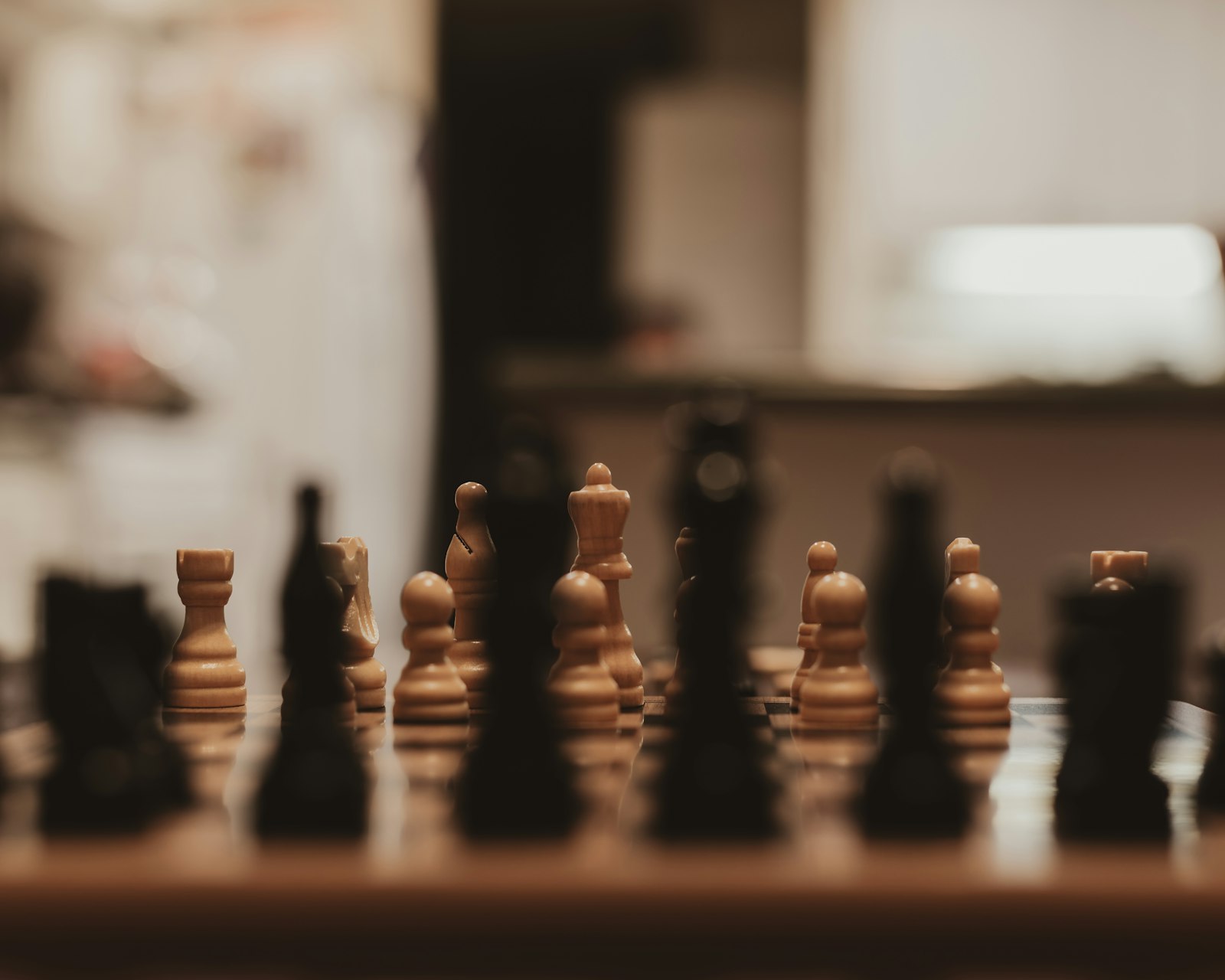
Ask most improving chess players how they study, and you’ll get some version of the same answer: play a lot of games, watch some videos, occasionally look up an opening line, and hope it all sinks in. It’s a plan built almost entirely around exposure, and exposure alone is a remarkably inefficient way to build chess knowledge that actually holds up under tournament pressure.
Serious chess improvement has a memory problem hiding inside it. Openings need to be recalled instantly, without conscious calculation, or you burn clock time in the first ten moves. Endgame technique needs to be automatic, because by the time you’re down to a king and pawn ending, you’re usually exhausted and low on time. Tactical patterns need to be recognized on sight, not derived from scratch every single time they appear. All three of these are, fundamentally, memory tasks. And memory tasks respond dramatically well to spaced repetition.
What Types of Chess Knowledge Benefit From Spaced Repetition
Not everything about chess improvement fits neatly into flashcards, and it’s worth being clear-eyed about that from the start. Deep strategic understanding, positional judgment, and the ability to calculate long, forcing variations are skills built through practice, analysis, and playing real games against real opposition. No flashcard deck replaces that.
But a large and often underappreciated share of chess knowledge is exactly the kind of discrete, well-defined information that spaced repetition handles beautifully:
Opening theory. Specific move sequences, key branching points, and the ideas behind them are precisely the kind of information that benefits from being drilled until instant. You don’t want to be re-deriving why 5…a6 matters in a Sicilian Najdorf every time it appears on the board, you want the response to be immediate.
Endgame technique. Certain endgame positions have objectively correct techniques, the Lucena position, the Philidor position, specific king and pawn opposition patterns, that need to be recognized and executed automatically rather than recalculated from first principles under time pressure.
Tactical motifs. Patterns like pins, forks, discovered attacks, and specific combinations that recur across thousands of different games are, at their core, pattern-recognition tasks. The more instantly you recognize a pattern, the faster and more accurately you play, especially under time pressure.
Key rules of thumb and exceptions. Chess is full of general principles (“knights on the rim are dim,” “don’t move the same piece twice in the opening”) paired with specific, important exceptions. Both the rule and the exception are worth encoding deliberately rather than relying on vague intuition.
The common thread across all four categories: they’re discrete, they recur constantly across real games, and getting them wrong or slow costs you clock time and points. That combination is exactly what spaced repetition was built for.
Building Opening Repertoire and Endgame Flashcard Decks
The single biggest mistake players make when they try flashcards for chess is building cards that are too passive, essentially “look at this position, see the answer.” That’s recognition, not recall, and it barely improves your actual over-the-board performance. The fix is building cards that force genuine retrieval, the same way effective flashcards work in any other subject.
For opening repertoire, structure your cards around specific decision points rather than entire memorized game scripts. A well-built card shows a board position after a specific sequence and asks: what’s the best move here, and why? The “why” part matters enormously, a card that only tests the move without the underlying idea produces knowledge that collapses the moment your opponent deviates slightly from the line you memorized.
Organize your opening deck by your actual repertoire, not by generic opening theory. If you play the Caro-Kann as Black, your deck should be built entirely around the specific lines, sidelines, and typical middlegame plans that arise from your repertoire, not a generic survey of every opening that exists. Depth in what you actually play beats breadth across openings you’ll rarely see.
For endgame technique, build cards around canonical positions with a clear, singular correct technique. Show the position, ask for the winning (or drawing) method, and, critically, require yourself to actually play it out on a physical or digital board before checking, not just state the idea in words. Endgame technique is procedural knowledge, and procedural knowledge needs to be rehearsed as a sequence of moves, not just recognized as a concept.
| Chess area | Good flashcard prompt | Weak flashcard prompt |
|---|---|---|
| Openings | ”Position after 1.e4 c6 2.d4 d5 3.e5, best plan for Black and why" | "What opening is this?” |
| Endgames | ”Play out the winning technique from this Lucena position" | "What is the Lucena position?” |
| Tactics | ”Find the tactic, name the pattern, calculate the full line" | "Is there a tactic here? (yes/no)“ |
Pairing SRS With Tactical Puzzles for Balanced Chess Improvement
Tactics deserve a slightly different approach than openings and endgames, because the goal isn’t memorizing specific positions, it’s building rapid pattern recognition across an enormous variety of positions you’ve never seen before. This is where combining spaced repetition with a large, varied tactical puzzle pool works especially well.
A strong routine looks like this: solve a batch of fresh tactical puzzles daily, ideally from a source with a large, varied pool rather than a small fixed set. For any puzzle you get wrong, or solve slowly, don’t just move on, turn it into a spaced repetition card. Include the position, the correct move, and a short note on the underlying pattern you missed (a pin you didn’t see, a back-rank weakness you overlooked, a desperado tactic you didn’t consider). Let that card re-enter your review schedule at increasing intervals, exactly the way you’d space out any other flashcard.
This combination gives you the best of both approaches. The fresh puzzle pool builds broad pattern-recognition speed across novel positions, which is what actually transfers to real games. The spaced repetition layer makes sure that the specific patterns you personally struggle with get reinforced deliberately, rather than being encountered once, missed, and never revisited. Without that second layer, most players make the same category of tactical mistake repeatedly across months of play without ever fully correcting it.
How Often to Review, and How Much Is Enough
A common worry is that this sounds like a lot of overhead on top of actually playing chess. In practice, it’s a small daily investment. Fifteen to twenty minutes of spaced repetition review, covering whatever opening lines, endgame positions, and missed tactics are due that day, is enough to build serious retention over months, precisely because the schedule concentrates your effort on material you’re at risk of forgetting rather than material you already know cold.
Resist the urge to over-build your decks early on. A tightly curated deck of your actual repertoire and the endgame positions you genuinely need is far more valuable than an enormous deck covering every opening and endgame that exists in theory. Depth and consistency beat breadth here, the same way they do in any other subject.
Avoiding the Common Pitfalls
A few mistakes show up repeatedly among players who try building chess flashcards and then abandon the habit within a month.
Making cards too long. A card that requires recalling a ten-move sequence in full is much more likely to be skipped or half-answered than a card built around a single critical decision point. Break long lines into several smaller cards, each testing one specific branch or moment, rather than one card testing an entire opening from memory.
Adding too much too fast. It’s tempting to convert an entire opening database into flashcards in one sitting after a burst of enthusiasm. This front-loads your review queue so heavily that the daily session becomes overwhelming within a week, which is precisely when most players quit. Add new cards gradually, a handful after each study session or lost game, rather than in one large batch.
Never pruning the deck. As your repertoire evolves, some old lines stop being relevant, an opening you no longer play, a plan you’ve since decided against. Leaving those cards in your review queue wastes time on knowledge you’ll never use again. Periodically remove cards tied to lines and plans you’ve actively moved away from.
Treating losses as failures instead of data. Every game you lose to a tactic you missed or an endgame you misplayed is raw material for your deck. The players who improve fastest are the ones who treat their own mistakes as the most valuable source of new flashcards, rather than something to move past quickly and forget.
The Bottom Line
Chess improvement is often talked about purely in terms of playing more games and studying with a coach or engine, and both of those matter enormously. But a meaningful chunk of what separates a player who “sort of knows” their openings and endgames from one who executes them instantly and confidently is, at its core, a memory problem. Spaced repetition is built precisely for that kind of problem: discrete, recurring knowledge that needs to be instantly available under time pressure.
Build your opening and endgame decks around genuine retrieval, not passive recognition. Feed your missed tactics back into a spaced review schedule instead of letting them evaporate after a single puzzle session. Keep the daily time investment small and consistent. Over months, this is what turns “I think I know this opening” into “I play this opening on autopilot,” which is exactly the difference that shows up on the clock and on the scoreboard.
Manually building and scheduling flashcards for every opening line, endgame position, and missed tactic is exactly the kind of maintenance most players abandon after a few weeks. LongTerMemory can turn your own notes, whether that’s an opening repertoire PDF or your own written analysis of missed puzzles, into spaced repetition decks automatically, so the review schedule keeps running without becoming its own chore.