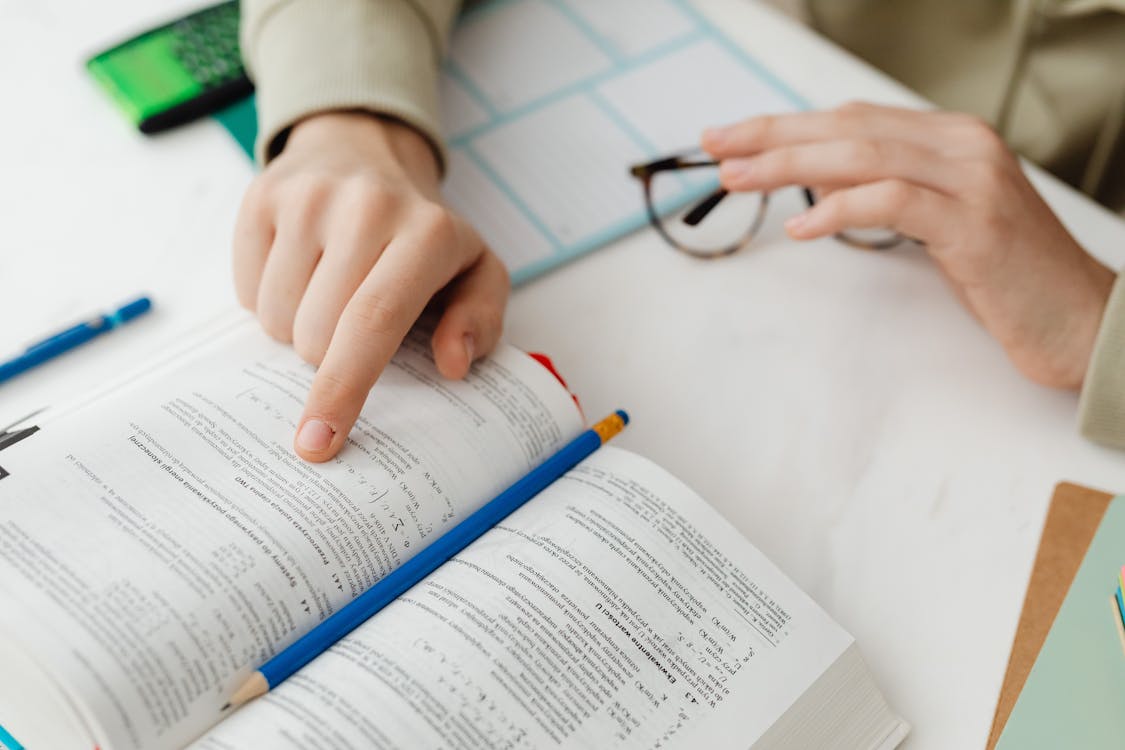

Let’s skip the lecture about how you should have started studying two weeks ago. You already know that. It’s tonight, the exam is tomorrow, and you need a plan that actually works with the hours you have left, not a plan that pretends you have more time than you do.
Here’s the honest truth: one night of studying will not make you an expert. But it can meaningfully move your score, sometimes dramatically, if you spend those hours on the right things instead of the wrong ones. Most one-night cram sessions fail not because there isn’t enough time, but because that time gets spent on low-value activity: re-reading entire chapters, re-copying notes, or bouncing anxiously between topics without finishing any of them. If you are facing a large reading load, our guide on how to read 100 pages in a day shows exactly how to triage and retain the material instead of just scanning it.
What’s Actually Achievable Tonight
Let’s set realistic expectations first, because they determine everything else about your strategy.
In one night, you cannot deeply learn an entire semester of material you’ve never engaged with. What you can do is:
- Solidify and organize material you’ve been exposed to but haven’t fully retained
- Identify and shore up the highest-value, highest-frequency topics likely to appear on the exam
- Build enough pattern recognition to correctly answer a meaningful percentage of questions, even on topics you don’t know cold
- Get familiar enough with the exam’s format and question style that you’re not losing points to confusion or panic
What you cannot do is turn “I never opened the textbook” into “I understand this subject.” If that’s genuinely your starting point, your goal tonight shifts from mastery to damage control: maximizing partial credit, recognizing patterns, and making sure you don’t lose easy points to unfamiliarity with format or instructions.
The 80/20 of a Single Night
The single most important decision you’ll make tonight is what to prioritize. Not everything in a course carries equal weight on the exam, and treating it that way is the fastest way to run out of time before covering the material that actually matters.
Step 1: Triage Before You Study Anything
Spend the first 15-20 minutes, before opening a single notebook, doing triage:
- Check the syllabus or study guide for stated topics and weighting, if the professor tells you what’s covered, believe them
- Look at old quizzes, homework, or practice problems for recurring themes, topics that showed up multiple times during the course are far more likely to reappear on the exam than something mentioned once in passing
- Identify what you already half-know versus what’s completely unfamiliar, half-known material is far cheaper to solidify than unfamiliar material is to learn from scratch
This triage step feels like it’s wasting precious time, but skipping it is the single biggest reason cram sessions run out of hours before covering the material that was actually going to be tested.
Step 2: Rank Topics by Return on Time Invested
| Topic Type | Study Priority | Why |
|---|---|---|
| Frequently repeated across homework/quizzes | Highest | High probability of appearing, and you have partial familiarity |
| Explicitly flagged by instructor | Highest | Direct signal of what’s tested |
| Foundational concept other topics build on | High | Understanding it unlocks partial credit on related questions |
| Mentioned once, never practiced | Low | Low probability of heavy weighting, expensive to learn from zero |
| Purely supplementary/tangential | Skip | Time is better spent elsewhere tonight |
Be ruthless here. It feels uncomfortable to consciously decide to skip a topic, but spreading your remaining hours evenly across everything, including material that’s unlikely to appear and would take too long to learn anyway, guarantees mediocre coverage of everything instead of strong coverage of what matters most.
The Highest-Leverage Study Techniques for Tonight
Not all study methods are equally time-efficient, and tonight, efficiency is everything. To set realistic expectations for how much you can actually encode, see our guide on how many pages can you memorize in a day.
Active recall beats re-reading, especially under time pressure. Re-reading a chapter feels productive but is one of the least efficient uses of limited time, you’re recognizing information, not building the retrieval pathway you’ll actually need on the exam. Instead: close the book, write down everything you remember about a topic, then check what you missed. This single technique will cover more ground per minute than any passive method.
Practice questions are your best diagnostic and your best study tool at once. If there are practice problems, old quizzes, or sample questions available, prioritize doing those over reading new material. Every practice question you attempt does double duty: it tests what you know and teaches you the specific format and phrasing the real exam will use.
Teach it out loud, even to an empty room. Explaining a concept in your own words, without notes, surfaces gaps in your understanding faster than almost anything else. If you stumble explaining something, that’s exactly the spot you need to review next.
Use short, timed bursts rather than one long unfocused session. Twenty-five to forty minutes of focused work on a single topic, followed by a five-minute break, keeps your attention sharper than four hours of unbroken, gradually degrading focus. Fatigue is the enemy of a cram session as much as lack of time is.
Why Sleep Beats Cramming Past a Certain Point
This is the part of one-night studying that almost everyone gets wrong, and it’s worth taking seriously even at 2am when it feels counterintuitive.
Memory consolidation, the process that actually locks information into a form you can retrieve under exam pressure, happens substantially during sleep. Studying straight through the night and walking into the exam on zero sleep doesn’t just make you tired, it measurably impairs your ability to retrieve the very information you stayed up cramming. Research on sleep and memory consistently shows that a full night of no sleep before a cognitively demanding task degrades performance more than the extra study hours could plausibly compensate for.
There’s a rough but useful rule here: if you have to choose between two more hours of study and two more hours of sleep, and the exam is more than a few hours away, sleep almost always wins. A brain running on 3 hours of sleep will underperform on recall, reasoning, and even basic reading comprehension, no matter how much material got crammed in before the lights went out.
A more realistic approach for most one-night situations:
- Study intensely and efficiently for a defined window, several hours, not “however long until sunrise”
- Set a hard stop time that still allows for at least 4-5 hours of sleep, even if that feels like giving something up
- Use the final 15-20 minutes before that stop time for the highest-priority review only, not new material
- Wake with enough buffer to do a light, calm review of your top-priority topics one more time before the exam, rather than starting the day already stressed and rushed
Four or five hours of sleep followed by a clear-headed final review consistently outperforms an all-nighter followed by a foggy, anxious walk into the exam room. This isn’t a moral argument about self-care, it’s a direct cognitive-performance argument: a rested brain retrieves information better than an exhausted one, full stop.
Environment and Habits That Quietly Waste Your Remaining Hours
Even with the right topic priorities and the right techniques, a surprising amount of cram-session time gets lost to environment and habit problems that are easy to fix once you notice them.
Phone notifications are the single biggest silent time thief in a one-night session. A five-second glance at a notification routinely turns into a five-minute scroll, and across a six-hour study window that adds up to real, meaningful lost time you don’t have tonight. Put the phone in another room, or use a strict focus mode, rather than trusting willpower to resist it sitting face-up next to your notes.
Multitasking between subjects feels efficient but isn’t. Jumping between two or three topics because you’re bored of one doesn’t actually cover more ground, it just means you never build enough momentum on any single topic to reach the deeper, more useful level of engagement. Pick one topic, commit to a defined block of time on it, and resist the urge to switch until that block ends.
Caffeine helps, but only within limits, and timing matters. A moderate amount of caffeine can genuinely improve alertness and focus during a long study session. But caffeine late in your study window, close to whatever sleep window you’ve planned, will directly undermine the sleep that’s protecting your memory consolidation. If you’re stopping to sleep at 2am, your last coffee should be several hours before that, not twenty minutes before you try to close your eyes.
A cluttered or uncomfortable study space costs more than it seems. You don’t need an elaborate setup, but a clear surface, decent lighting, and a chair that doesn’t force you to shift constantly all reduce the small frictions that otherwise chip away at focus over a long session.
None of these fixes require extra time you don’t have. They just stop time you do have from leaking away unnoticed.
If You Have to Do This Again
If tonight is a genuine emergency, an unexpected schedule collision, a health issue, something that legitimately couldn’t be avoided, that’s just life. But if one-night cramming has become your default exam strategy, it’s worth being honest that it’s a pattern with a real cost: chronically higher stress, weaker long-term retention of material you’ll likely need again later, and scores that consistently underperform what steady, spaced preparation would produce.
The fix isn’t studying harder in the moment, it’s building a system where information gets reinforced over time instead of crammed in all at once. Tools built around spaced repetition, like LongTerMemory, exist specifically to prevent the one-night scramble: you upload course material as you go, and the system automatically schedules brief review sessions spaced out over the following days and weeks, so the night before an exam becomes a light confidence check instead of a full-blown emergency.
But that’s a project for after this exam. Tonight, triage ruthlessly, use active recall over passive review, and protect enough sleep that the information you did manage to learn is actually there for you tomorrow morning.