Memory Techniques How to Study Chinese Characters Using Spaced Repetition
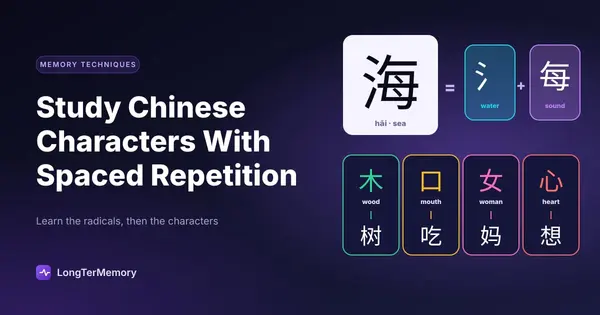
Learn how to memorize Chinese characters faster using spaced repetition, radical-based learning, and writing practice for lasting Mandarin retention.
Skip the re-read. Learn why the first review matters so much, how to run a 15-minute next-day recall session, and how to make it part of your daily routine.
Set up Toggl or Clockify for studying, see where your hours really go, and use the data to rebalance your schedule across subjects, with a worked example.
Failed your certification exam? Here's what to do in the first 48 hours, how to read your score report, and how to study differently for your retake.
What the Series 65 tests, who needs it, the 92 of 130 passing score, how to prioritize its four sections, and a 6-week plan with a practice question strategy.
Just realized you misread an exam question? Here's what to do in the next 60 seconds: decide if it's worth fixing, calm down fast, and protect your score.
No results found
Try different keywords
Page 4 of 4 — 109 articles tagged with spaced repetition
Memory Techniques Learn how to memorize Chinese characters faster using spaced repetition, radical-based learning, and writing practice for lasting Mandarin retention.
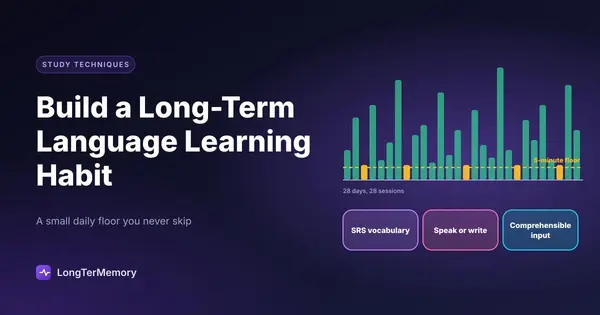
Study Techniques Discover how to build a language learning habit that actually lasts. Science-backed strategies to make consistent practice non-negotiable.
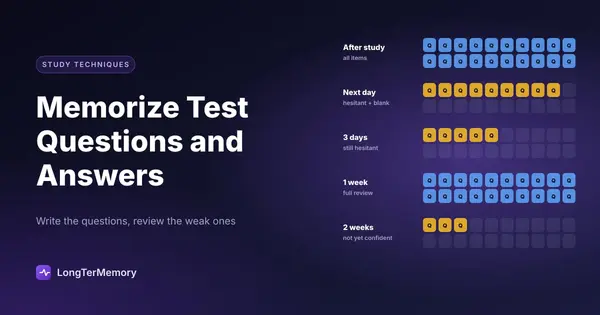
Study Techniques Build your own question bank, harness the generation effect, and review Q&A sets with spaced repetition to ace any exam with confidence.
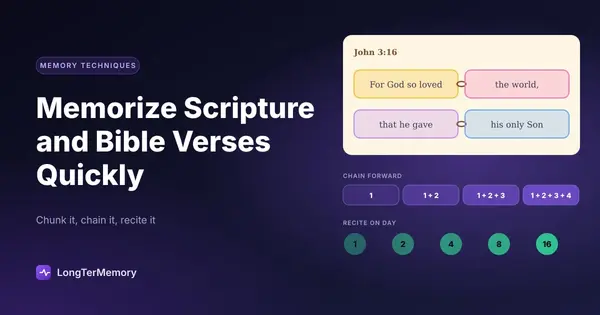
Memory Techniques Learn the chunk-and-chain method, rhythm-based recitation, and spaced review schedules to memorize Bible verses and scripture passages that actually stay.
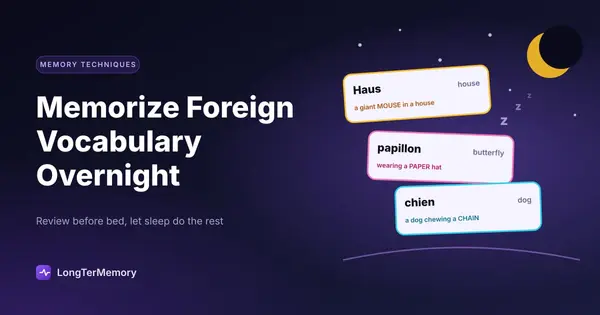
Memory Techniques Use science-backed pre-sleep review, spaced repetition, and context techniques to memorize foreign language vocabulary overnight and make it stick.
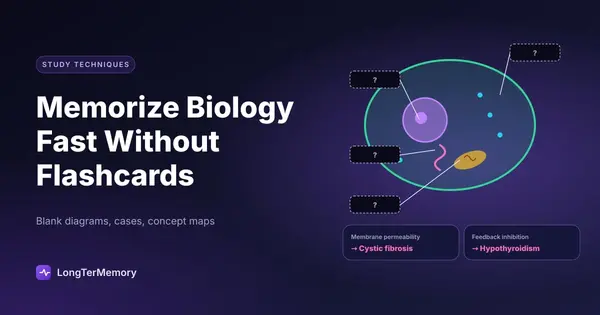
Study Techniques Want to know how to memorize biology fast? Use diagrams, stories, active recall, and concept mapping to learn biology quickly without flashcards.
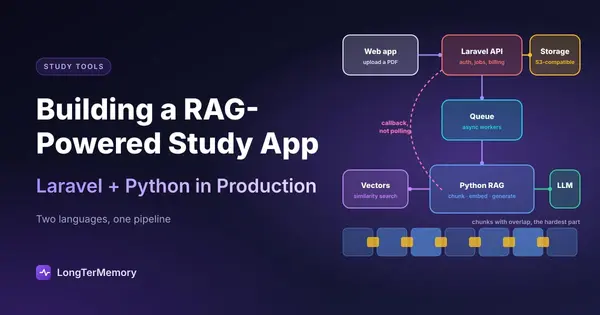
Study Tools How I combined Laravel, FastAPI, Celery, Qdrant and OpenAI into an AI study platform: what worked, what didn't, and the chunking problem.
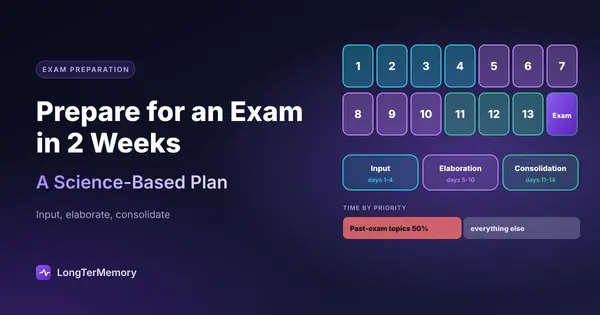
Exam Preparation Behind on studying? This 2-week exam prep plan uses the 3-phase input-elaboration-consolidation method to help you retain more in less time.
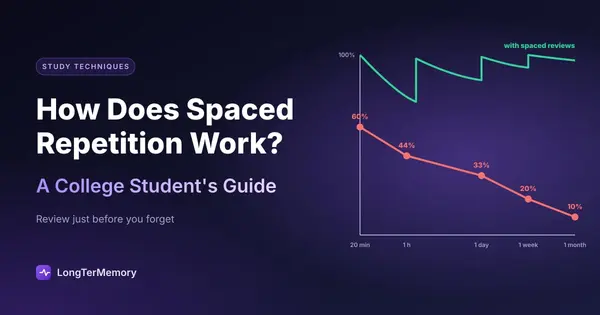
Study Techniques How does spaced repetition work? Learn the science, the review schedule, and the best tools to retain more and ditch cramming in college.
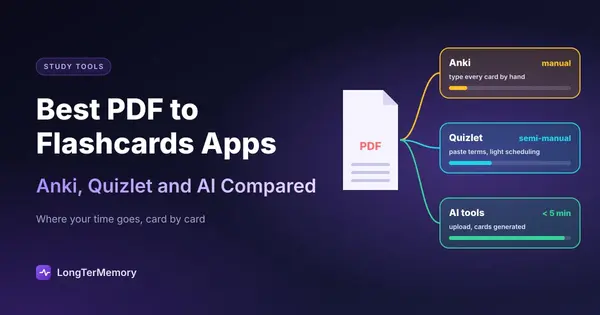
Study Tools Which flashcard app works best with PDFs? An honest comparison of Anki, Quizlet, and AI tools for studying from textbooks and lecture notes.
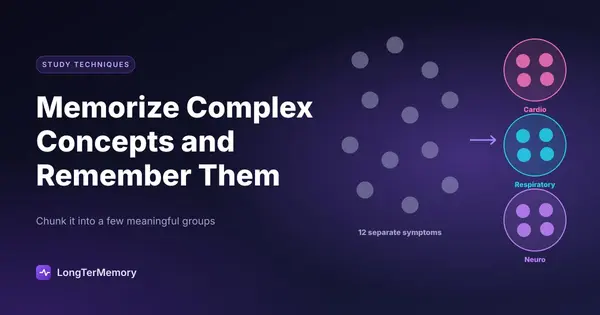
Study Techniques Learn how to memorize complex information using the Ebbinghaus forgetting curve, mental association techniques, and optimal review intervals.
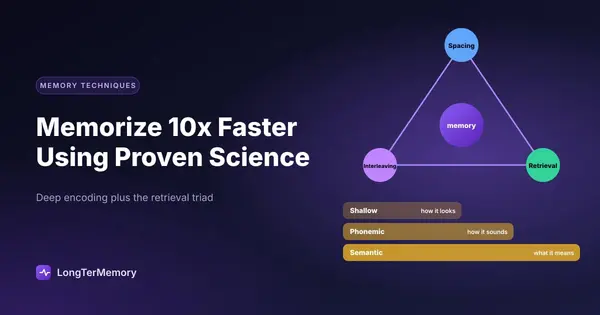
Memory Techniques What "memorize 10x faster" really means: the research on encoding, spacing, interleaving and retrieval, turned into a daily memorization routine.
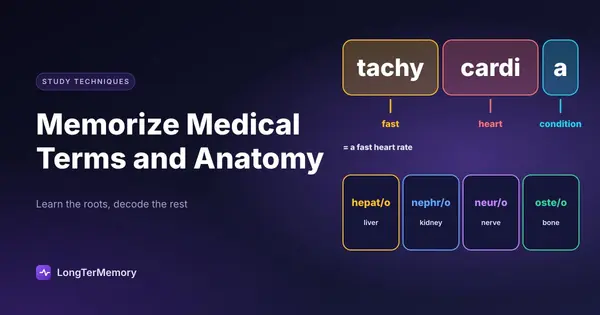
Study Techniques Master medical terminology and anatomy with proven strategies including etymology, visual diagrams, and spaced repetition for pre-clinical success.
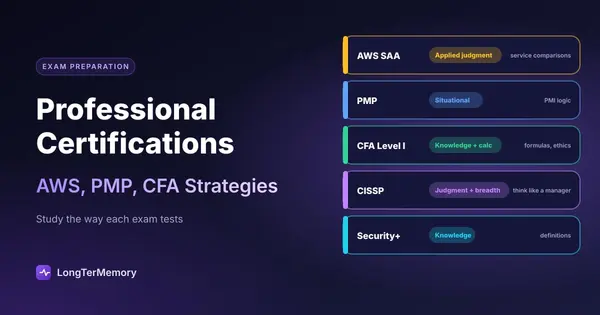
Exam Preparation How to study for AWS, PMP, CFA and other professional certifications: read the exam outline, plan by exam type, stay motivated and handle renewals.
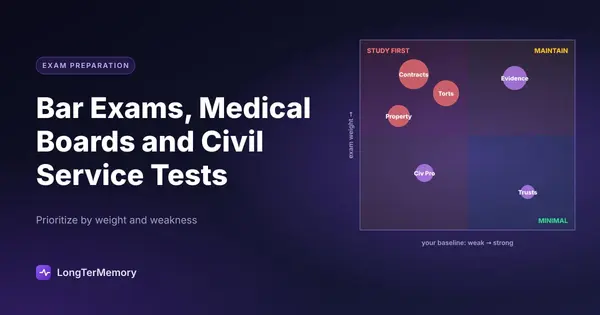
Exam Preparation A study system for the bar exam, medical boards and civil service tests: organize thousands of pages, review with spaced repetition and study around work.
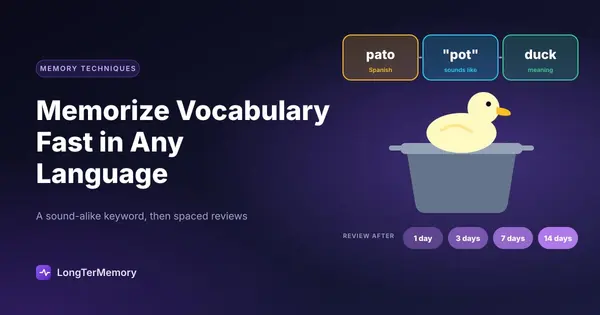
Memory Techniques Memorize vocabulary fast in any language with the keyword method, spaced repetition, context sentences, word clusters and early output.
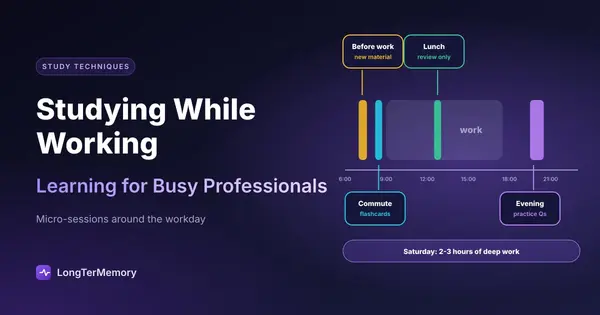
Study Techniques Learn how to study effectively with a full-time job. Science-backed micro-study techniques and time management strategies for working learners.
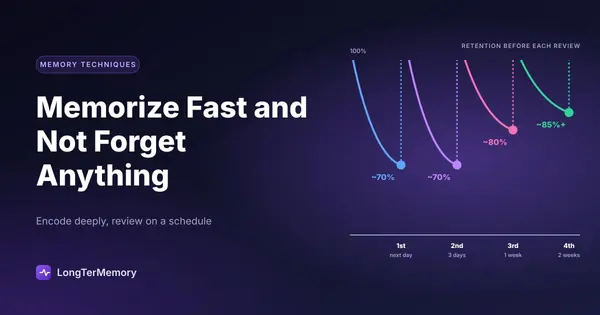
Memory Techniques How to memorize fast and keep it: recall before you look, encode deeply, review within 24 hours, then space your reviews. A simple daily system.
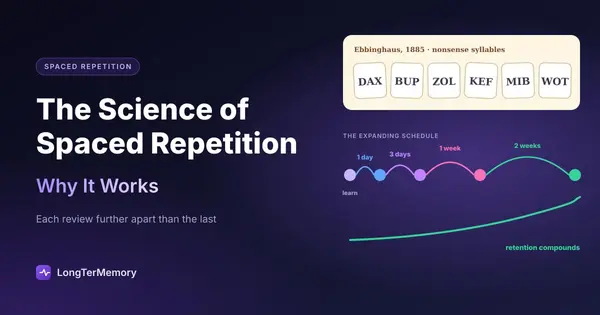
Spaced Repetition What spaced repetition is, why it works, the review schedule to follow, and how to start with paper or an app. Backed by 140 years of memory research.