Study Techniques How to Use Elaboration to Make Facts Stick
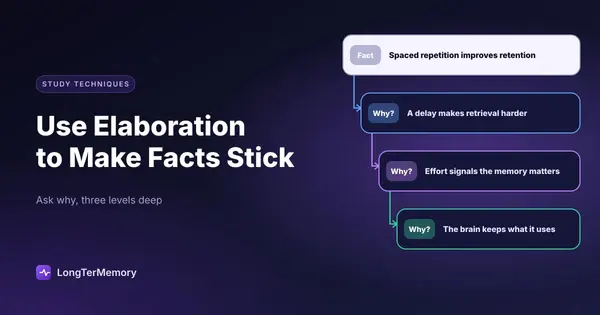
Elaborative encoding is one of the most powerful memory techniques in cognitive science. Learn how to connect new facts to what you know and make them stick.
A practical DOP-C02 study guide: exam domains, key AWS services and CI/CD concepts, practice question strategy, and a spaced repetition plan to retain it all.
Turn commutes and spare minutes into study time. Learn how to record, explain, and transcribe voice notes, and pair them with retrieval and spaced repetition.
Yes, partly: Quizlet's Flashcards have a spaced repetition option on the website. Here's how it works, where it falls short, and what to use instead.
Knowt vs RemNote compared on spaced repetition, notes, AI, imports and price, so you can pick the right app for your exams in five minutes.
Quizlet vs Knowt compared on free features, Learn mode, spaced repetition, AI tools and price, with a clear verdict for each kind of student.
No results found
Try different keywords
Page 4 of 5 — 141 articles about study techniques
Study Techniques Elaborative encoding is one of the most powerful memory techniques in cognitive science. Learn how to connect new facts to what you know and make them stick.
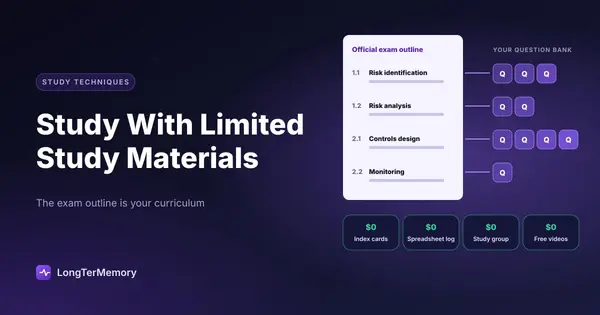
Study Techniques No textbooks? No problem. Learn how to create your own study content, use official outlines, and find community resources when prep materials are scarce.
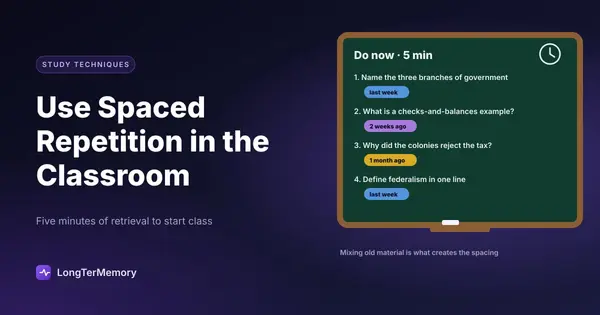
Study Techniques A guide for teachers on integrating spaced repetition and retrieval practice into classroom instruction to boost long-term student retention.
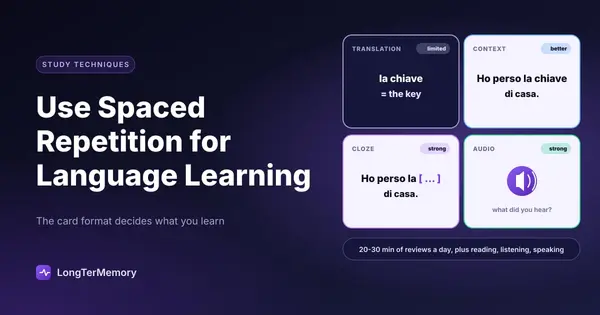
Study Techniques Learn optimal SRS flashcard formats for language vocabulary, how to balance vocabulary and grammar, and the best apps with native audio.
Study Techniques Discover the 10 evidence-based study habits top scorers actually use, what most students get wrong, and how to build a pre-exam routine that wins.
Study Techniques Where to find study partners online, how to structure productive sessions, and what makes a good accountability partner for long-term success.
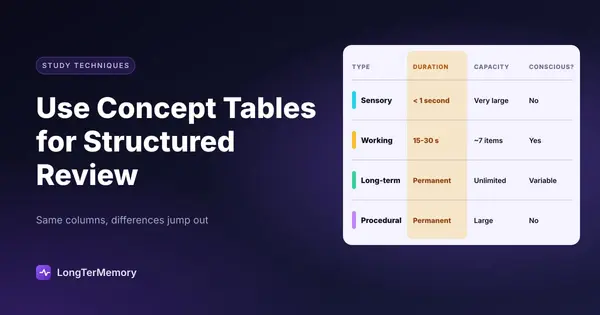
Study Techniques Learn how concept tables help you compare, organize, and retrieve study material faster, with practical examples for any subject.
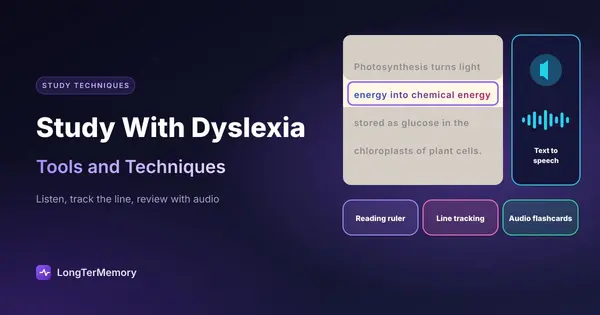
Study Techniques Practical strategies, digital tools, and active recall adaptations for dyslexic students who want to study smarter and retain more.
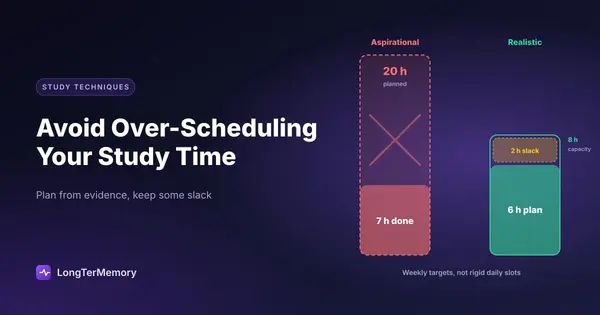
Study Techniques Learn why ambitious study schedules fail and how to build a realistic plan based on your actual capacity, past performance, and cognitive limits.
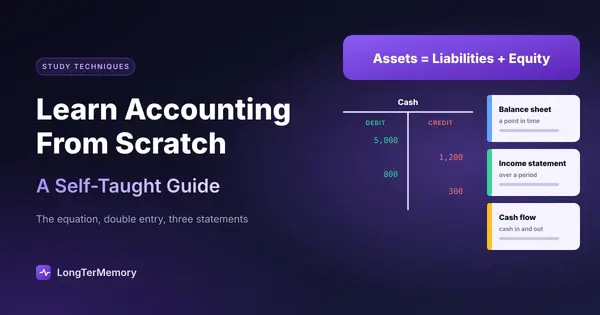
Study Techniques A complete guide to learning accounting independently, with the right resources, study methods, and spaced repetition strategies for real retention.
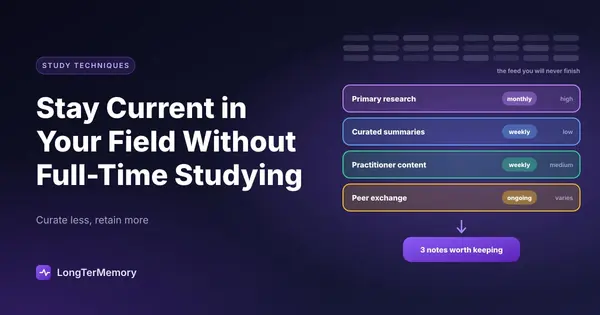
Study Techniques Learn sustainable micro-learning habits and smart curation strategies to keep your professional knowledge sharp without sacrificing your time.
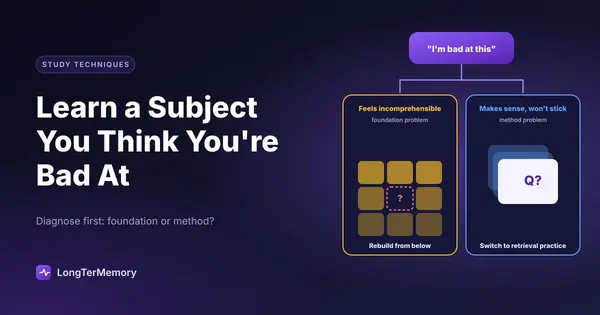
Study Techniques Struggling with a subject you think you can't do? Discover how to rebuild from fundamentals and finally get good at the subjects that frustrate you most.
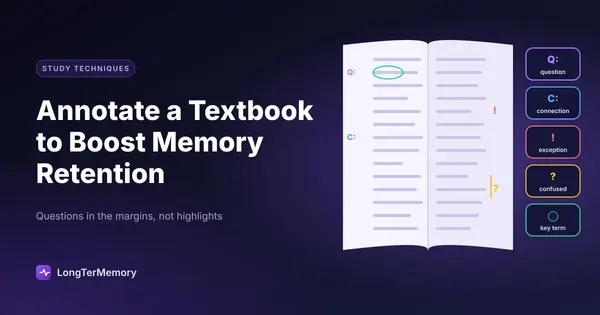
Study Techniques Learn how to annotate a textbook effectively using question-based methods that turn passive reading into active memory building.
Study Techniques Discover why the difficulty of active learning is evidence that real learning is happening, and how to use productive struggle to study smarter and retain more.
Study Techniques Learn how to create a structured mental map when entering a new field, so you learn faster, retain more, and connect ideas like an expert from day one.
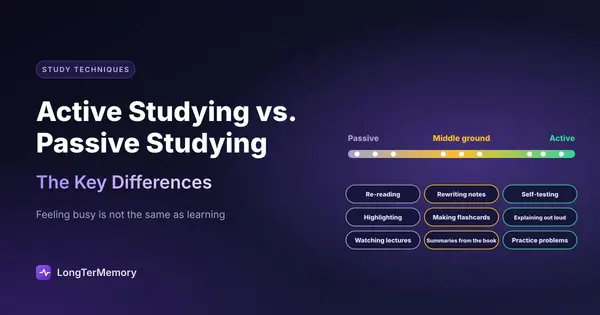
Study Techniques Understand what separates active from passive study, why the research gap is so stark, and get a practical checklist to make every study session more effective.
Study Techniques Discover what a genuine learning culture looks like, how managers can enable team growth, and how your own study success can inspire colleagues to follow.
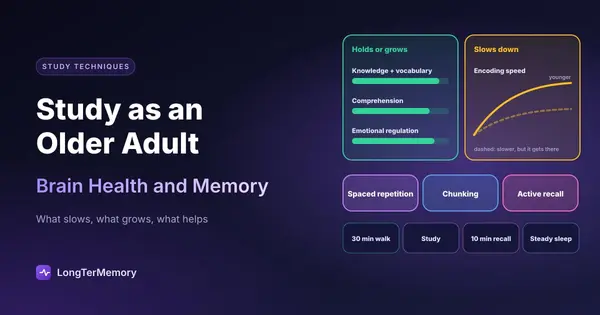
Study Techniques Discover how memory changes with age and which study techniques work best for adult learners who want to keep their minds sharp and retain more.
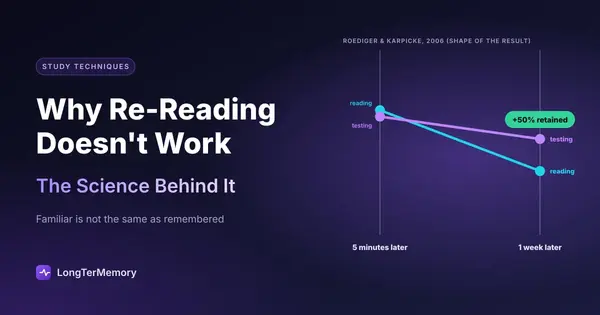
Study Techniques Research is clear: re-reading is one of the least effective study methods. Here's why it fails and what retrieval practice does instead.
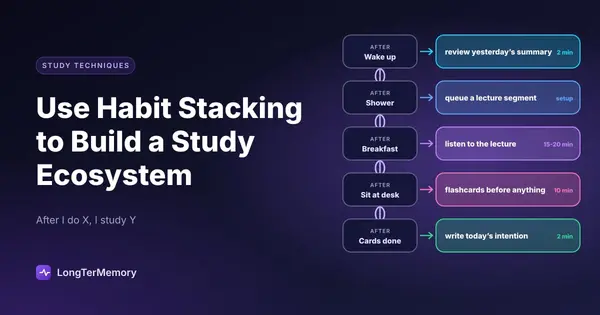
Study Techniques Learn how habit stacking can turn scattered study sessions into a self-reinforcing ecosystem that makes consistent learning automatic.
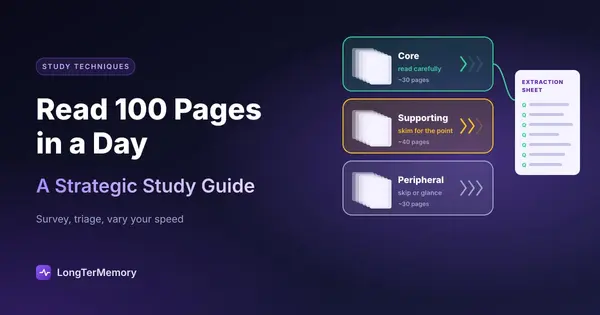
Study Techniques Learn how to read 100 pages in a day without losing comprehension. Use selective reading, active extraction, and recall to cover material fast.
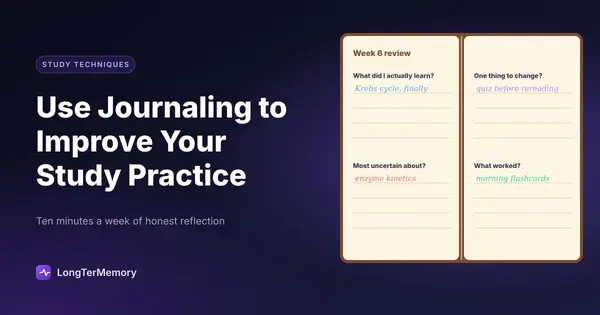
Study Techniques Discover how a simple study journal can transform your learning, identify patterns in your retention, and make spaced repetition work even better.
Study Techniques Your chronotype determines when your brain performs best. Here's how to align your study sessions with your biology for maximum retention and focus.
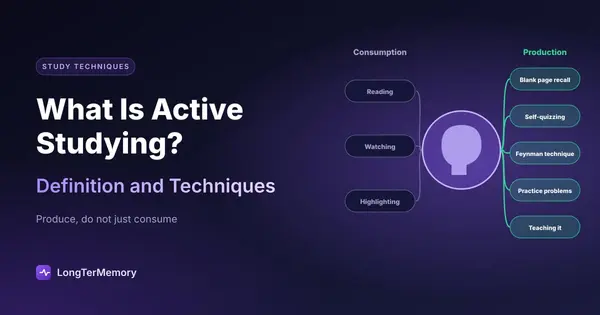
Study Techniques Active studying means producing information, not just consuming it. Here's what it is, why it works, and five techniques to start using today.
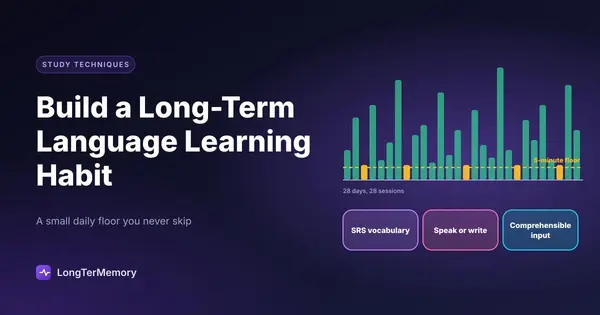
Study Techniques Discover how to build a language learning habit that actually lasts. Science-backed strategies to make consistent practice non-negotiable.
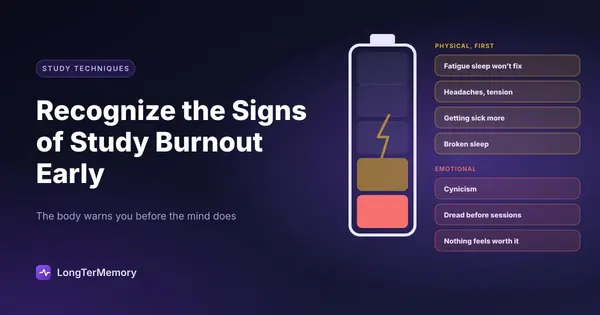
Study Techniques Learn to spot study burnout before it takes over. Discover the early warning signs and proven strategies to recover fast and study smarter.
Study Techniques Motivation isn't a prerequisite for studying , it's a byproduct. Discover behavioral strategies to start studying even when you feel completely unmotivated.
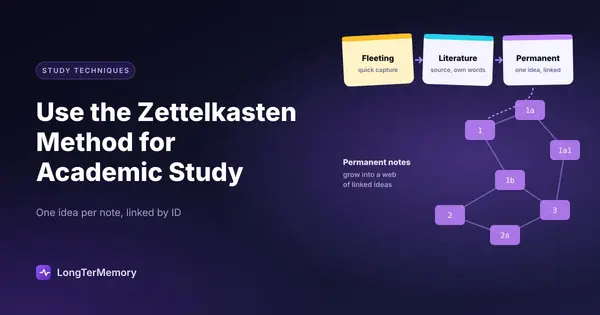
Study Techniques Discover how the Zettelkasten method transforms your notes into a connected knowledge network that supercharges academic learning and retention.
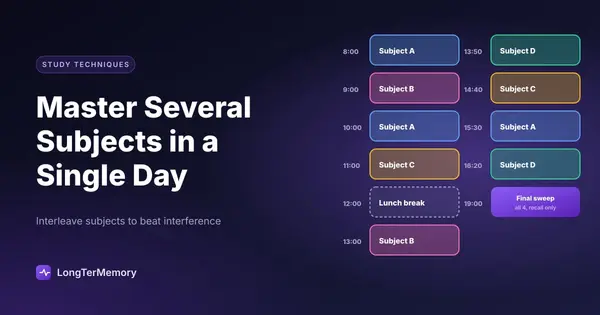
Study Techniques Use interleaving, time-blocking, and smart prioritization to study multiple subjects in one day without confusion, interference, or overwhelm.
Study Techniques Build your own question bank, harness the generation effect, and review Q&A sets with spaced repetition to ace any exam with confidence.